




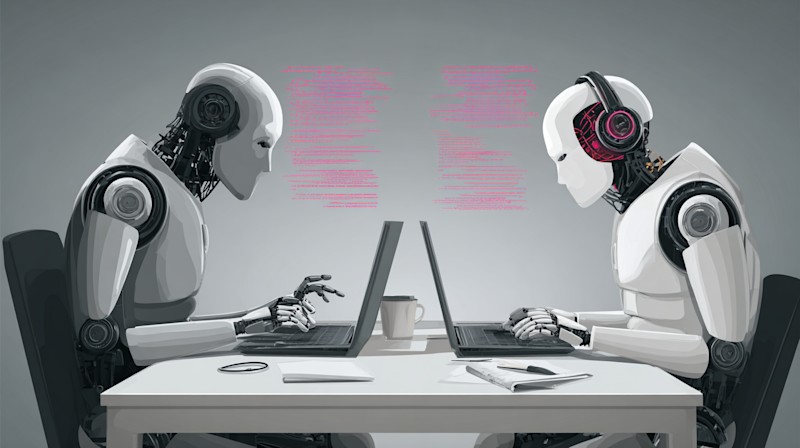
Egnyte, a $1.5 billion cloud content governance firm, is actively defying the popular narrative that artificial intelligence will soon replace software developers. Instead of cutting jobs, the company is doubling down on hiring junior engineers, using AI tools to accelerate their onboarding, deepen their understanding of complex codebases, and rapidly advance them to senior roles. This approach signals a pragmatic shift in how enterprises can leverage automation: not to eliminate humans, but to amplify their capacity.
AI-Assisted Development at Scale
Egnyte has integrated AI coding tools like Claude Code, Cursor, Augment, and Gemini CLI into its developers’ workflows across more than 350 global team members. The goal isn’t to automate roles out of existence, but to streamline processes and enhance productivity.
The company, serving over 22,000 users including major brands like NASDAQ, Red Bull, and BuzzFeed, uses AI for tasks such as:
- Code Comprehension: Helping new hires quickly navigate massive codebases (particularly Java, with its numerous library versions).
- Smart Search: Facilitating fast access to relevant code snippets.
- Automated Pull Request Summaries: Generating concise overviews of proposed code changes.
- Unit Testing: Automating component verification to ensure stability.
However, Egnyte maintains strict human oversight. No AI-generated changes are committed directly to production without review. The focus remains on AI as a tool —a productivity improvement rather than an autonomous replacement.
The Junior-to-Senior Acceleration Path
Egnyte’s CTO, Amrit Jassal, emphasizes the importance of continuous talent development. The company sees junior engineers as the future senior leaders. AI tools shorten the learning curve, allowing them to contribute meaningfully sooner.
Junior developers are involved in all stages of the development lifecycle: requirements analysis, deployment, maintenance, and more. This hands-on approach, combined with AI assistance, accelerates their growth. Senior engineers still handle core architectural tasks requiring system-level expertise.
The company expects a faster progression from junior to mid-level roles, but recognizes that some senior engineers may need time to adapt to the new tools. A balanced approach—leveraging the enthusiasm of new hires alongside the experience of veterans—is critical.
Beyond Coding: AI Across Teams
The impact extends beyond the engineering department. Product management uses AI to create interactive prototypes, while UX teams leverage it to rapidly generate design options. This collaborative approach ensures everyone is on the same page, reducing ambiguity and speeding up development cycles.
“The takeaway for technical decision-makers is not that AI will eliminate engineering jobs — but that it will reshape how talent is developed.”
The Bottom Line
Egnyte’s approach demonstrates a smart integration of AI as infrastructure. The company isn’t buying into the hype about AI replacing coders. Instead, it’s treating AI as a tool for scaling engineering capacity, accelerating talent development, and injecting fresh perspectives. Enterprises that follow this model will be better positioned to thrive in the age of AI, without sacrificing the critical human judgment, creativity, and accountability that drive innovation.