



LEGO has unveiled its new Smart Brick at CES 2026 in Las Vegas, a move that comes as parents and educators alike reassess the role of digital devices in childhood development. These aren’t just plastic blocks; they’re interactive toys designed to bridge the gap between physical play and technology. The timing is critical: while screens dominate children’s lives, there’s a growing push to reclaim the benefits of hands-on, tactile experiences.
How the Smart Bricks Work
The Smart Brick system isn’t a single component but relies on small, attachable tags that dictate its actions. Once paired, shaking the brick activates its features, including lights, sounds, and interactive responses. The bricks can communicate with each other, enabling dynamic scenarios that mimic real-world interactions.
Interactive Scenarios: Beyond Simple Building
Demonstrations included a mother duck with ducklings that “misbehaved” with quacking and even simulated flatulence when the mother wasn’t looking. Another example involved ducklings racing on skateboards toward a trophy, with the brick-enabled trophy identifying the closest duck as the winner. These examples show how the technology can be used to create simple, engaging games with a tech twist.
Initial Release: Star Wars Sets Only
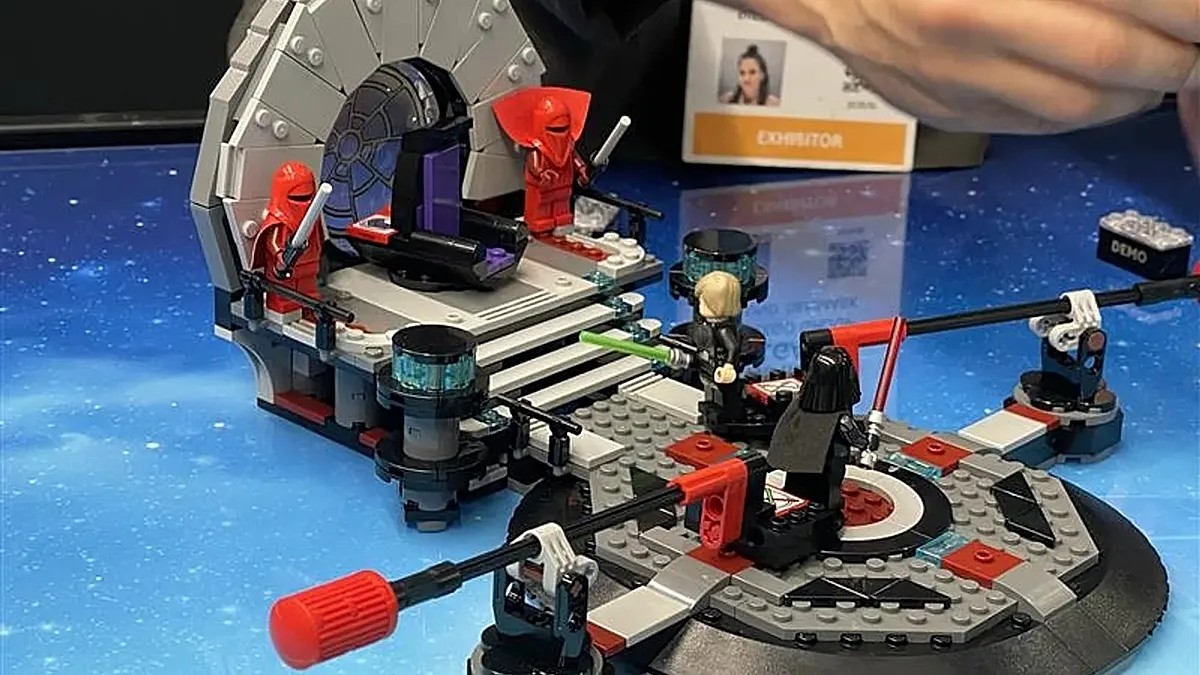
For now, the Smart Bricks will be exclusive to LEGO Star Wars sets. This partnership with Lucasfilm allows for deeply interactive scenarios. Darth Vader can “sing,” Chewbacca can “purr” when stroked, and iconic battles come to life with lights and sounds.
“The fun of this is exploring and discovering through play,” David Filon, Lucasfilm’s chief creative officer, told Euronews Next. “If you move things differently, if you’re swooshing around, the starships make different sounds the faster you go… there might be some fun experiences you get there.”
Key Features and Specifications
The Smart Brick technology took eight years to develop. The bricks themselves are the same size as a standard 2×4 LEGO brick and charge wirelessly on a pad, offering roughly 45 minutes of use per charge. Notably, the bricks contain no battery, relying entirely on inductive charging.
A Return to Physical Play?
LEGO executives emphasize that this isn’t about replacing digital experiences, but enhancing physical play. Tom Donaldson, LEGO’s senior vice president, stated that physical play has “tremendous benefits” beyond just entertainment. He suggests miniaturization and broader technological advancements will make deepening tactile experiences easier.
“I do hope that more broadly imaginative play gets ever and ever stronger… whether it’s digital or here, in the more physical side.”
The introduction of LEGO Smart Bricks reflects a broader trend: a growing recognition that physical play remains vital for development. This technology could be the start of a trend where companies actively seek ways to integrate tech into hands-on experiences, rather than just competing for screen time.