




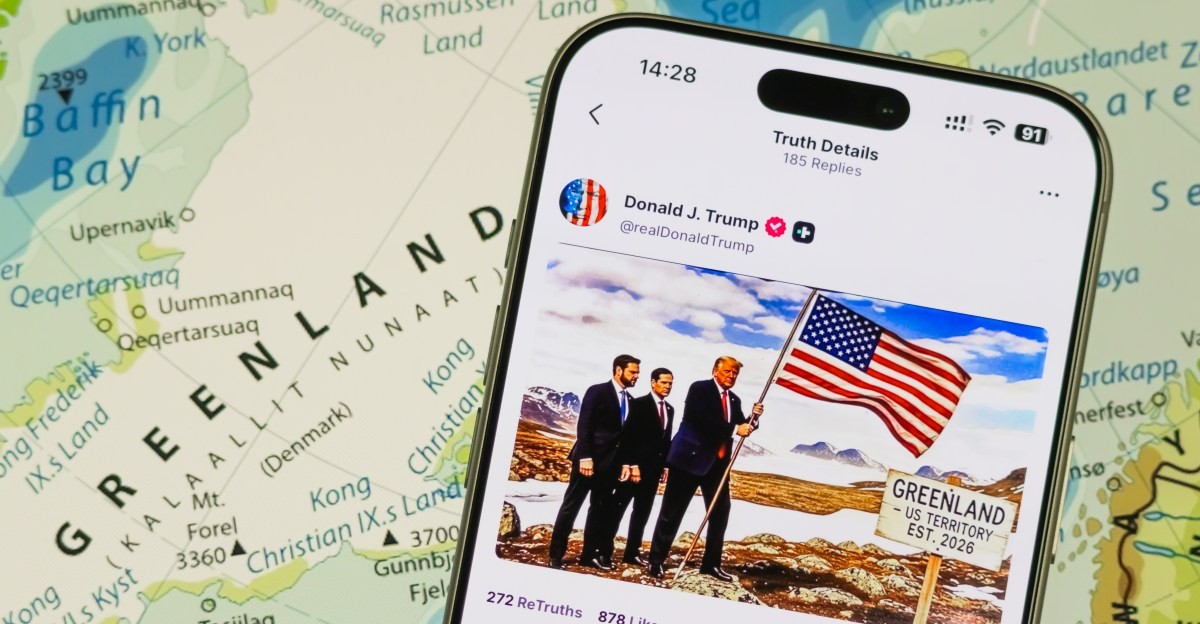
President Donald Trump is once again aggressively pursuing the acquisition of Greenland, escalating beyond previous overtures to outright threats of military intervention. This renewed focus follows what many observers describe as a pattern of increasingly assertive foreign policy actions, including the controversial intervention in Venezuela and the capture of President Nicolás Maduro.
From Economic Interest to Military Pressure
What began as a seemingly outlandish proposal in 2019 – offering to buy Greenland from Denmark – has evolved into a more menacing posture. Trump has repeatedly cited “national security” and “economic interests” as justification, arguing that the strategically located island is vital for the US. His rationale now includes unsubstantiated claims about Russian and Chinese naval presence in Greenland’s waters, framing the situation as a direct threat to American dominance.
The shift is significant. The earlier offer was met with swift rejection from Copenhagen. Now, with Trump’s administration demonstrating a willingness to bypass international norms – as evidenced by the Venezuelan operation – the possibility of forced annexation looms larger. This is not merely speculation; Trump has openly suggested military action against Colombia over drug cartels and warned Iran of severe consequences for suppressing protests, indicating a broader trend of unilateral interventionism.
Historical Precedent: The US Virgin Islands
The situation echoes a lesser-known historical parallel: the 1917 purchase of the Danish West Indies (now the US Virgin Islands). Driven by fears that Germany might seize the islands to disrupt shipping through the Panama Canal, President Woodrow Wilson’s administration pressured Denmark into selling the territory for $25 million. While the context differs (then, strategic shipping lanes; now, potential military positioning), the underlying principle remains: a superpower asserting its dominance over a smaller nation under the guise of national security.
The historical comparison is crucial because it shows that US territorial expansion – even through ostensibly legal means – has always been driven by strategic and economic calculation. The current push for Greenland fits this pattern, though the potential for outright military force raises the stakes considerably.
Implications and Future Outlook
The escalating rhetoric and aggressive actions surrounding Greenland are indicative of a broader trend: Trump’s willingness to disregard international law and norms in pursuit of perceived US interests. This approach not only strains relationships with allies like Denmark but also sets a dangerous precedent for future interventions.
The situation raises critical questions about the limits of American power and the potential for further destabilization in the Arctic region. As climate change opens up new shipping routes and resource extraction opportunities, Greenland’s strategic value will only increase, making it a likely flashpoint for geopolitical competition. The coming months will determine whether Trump’s threats remain rhetoric or escalate into concrete action, potentially reshaping the balance of power in the North Atlantic.