

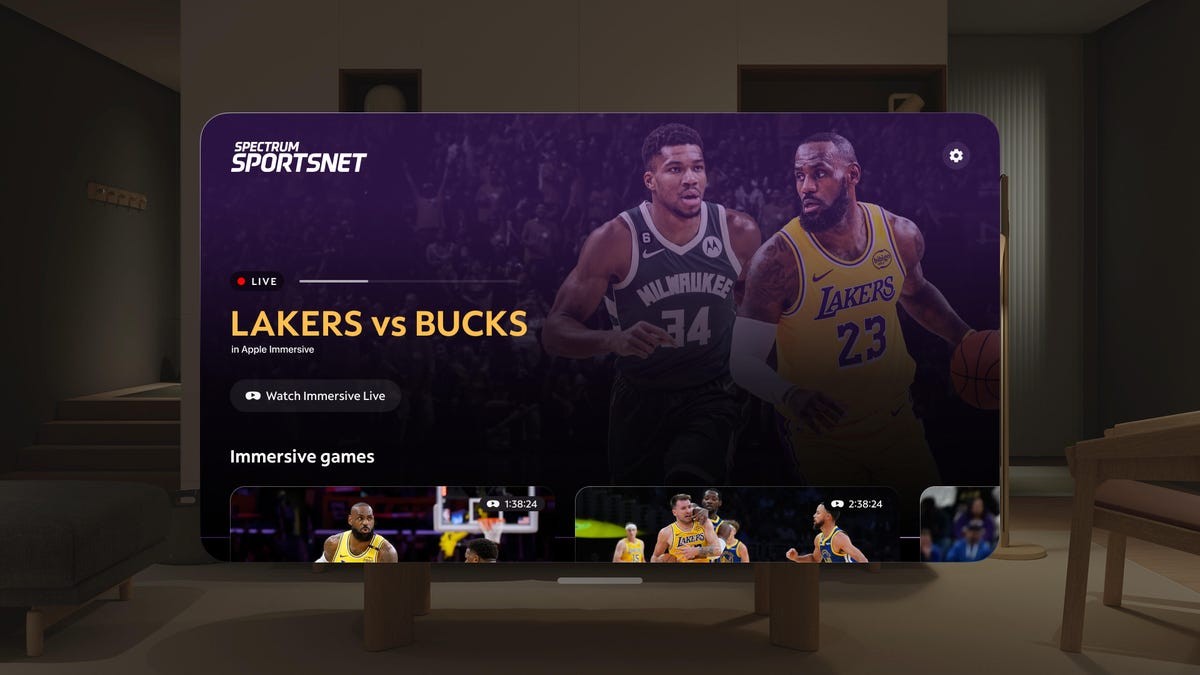
Apple’s $3,499 Vision Pro headset has entered the live sports arena, offering a courtside view of NBA games through a partnership with Spectrum. While the initial offering—debuting with the Lakers-Bucks game on January 9—demonstrates impressive video quality, it falls short of delivering a truly immersive experience. The current iteration feels stuck between traditional broadcasting and full virtual presence, leaving users wanting more interaction and flexibility.
The Illusion of Presence
The Vision Pro’s immersive NBA broadcast provides a 180-degree courtside view, mimicking the feeling of being at the game. Cameras are positioned at the front-row center and at each basket, alternating perspectives. However, this experience is largely passive. Unlike earlier VR attempts with headsets like the Gear VR, where users felt both immersed and constrained, Apple’s offering doesn’t fully bridge the gap between watching and being there.
The current setup requires a Spectrum SportsNet subscription (available in Southern California, Nevada, and Hawaii) or an NBA app login for next-day viewing. But the high price tag of the Vision Pro itself remains a significant barrier for most sports fans.
The Missing Layer: Interaction and Control
The biggest limitation is the lack of seamless integration with secondary devices. While users can technically access their phones through the headset’s pass-through camera, it disrupts the immersion. The desire to browse stats, share moments, or even just stay connected via text messages feels unfulfilled.
Apple’s Vision Pro NBA app includes a detailed, multi-screen stat view with a 3D court map, yet basic features—like wrist-tilt stat overlays or dynamic camera control—are missing. The broadcast remains a fixed feed, shifting the viewer rather than allowing them to choose their perspective. This feels like a missed opportunity to amplify the viewing experience with real-time data and personalized control.
Where Apple Stands Now
This early attempt at immersive sports broadcasting is a step in the right direction, but it highlights the limitations of the Vision Pro after two years on the market. The device remains expensive and lacks the “pro” features needed to truly revolutionize how fans consume live sports.
The current experience is fun, but it’s not yet the ultimate way to watch games that fans deeply care about.
For the Vision Pro to succeed in immersive sports, Apple needs to make the technology more affordable and develop features that allow users to fully interact with the broadcast while remaining connected to the real world. Until then, it remains a promising demonstration of high-quality cameras and displays, rather than a truly transformative experience.