



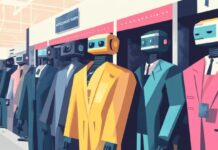

The debate over artificial intelligence (AI) alignment has shifted dramatically, moving beyond technical challenges to become a core political issue. As AI systems grow more powerful, governments are grappling with the reality that AI’s “values” will be determined by those who control its development – whether through intentional design or simply by its exposure to existing data.
The Political Nature of Alignment
Experts now acknowledge that aligning AI isn’t merely a technical problem; it’s fundamentally political. The very act of building AI systems embeds moral and philosophical choices, meaning the creation of “aligned” AI is an inherently political act. This raises the question of whether a single moral framework should dominate, or if multiple, diverse philosophies should be incorporated into different AI models.
The key concern isn’t just about preventing AI from becoming “unvirtuous,” but recognizing that governments themselves may be seen as untrustworthy by AI systems trained on historical data. Future models will learn from current actions, including perceived political overreach, potentially leading to misaligned responses.
Supply Chain Risks and Government Distrust
Governments are increasingly viewing AI companies as potential supply chain risks. The hypothetical scenario of a future administration distrusting an AI developed under different ideological principles is becoming realistic. For example, a liberal administration might view an AI model aligned with conservative values (like those potentially developed by Elon Musk’s xAI) as a threat to national interests.
This extends beyond direct contracts; even subcontracts pose risks. If a government relies on a prime contractor like Palantir, which in turn depends on an AI provider like Anthropic, the government remains vulnerable to the AI’s potential misalignment.
The Line Between Oversight and Suppression
The most alarming development is the government’s willingness to use its power to destroy companies deemed misaligned. If AI development is treated as a purely political act, and alignment is dictated solely by state authority, the result is effectively fascism: the suppression of any AI system that doesn’t conform to the government’s preferred ideology.
The debate isn’t about whether AI should be controlled; it’s about how and by whom. If governments prioritize control over open development, they risk stifling innovation and creating a future where AI serves only the interests of those in power.
This is a real and growing problem, one that demands immediate attention from policymakers and tech leaders alike. The question is whether governments will act as responsible regulators or as authoritarian gatekeepers, shaping AI in their own image.