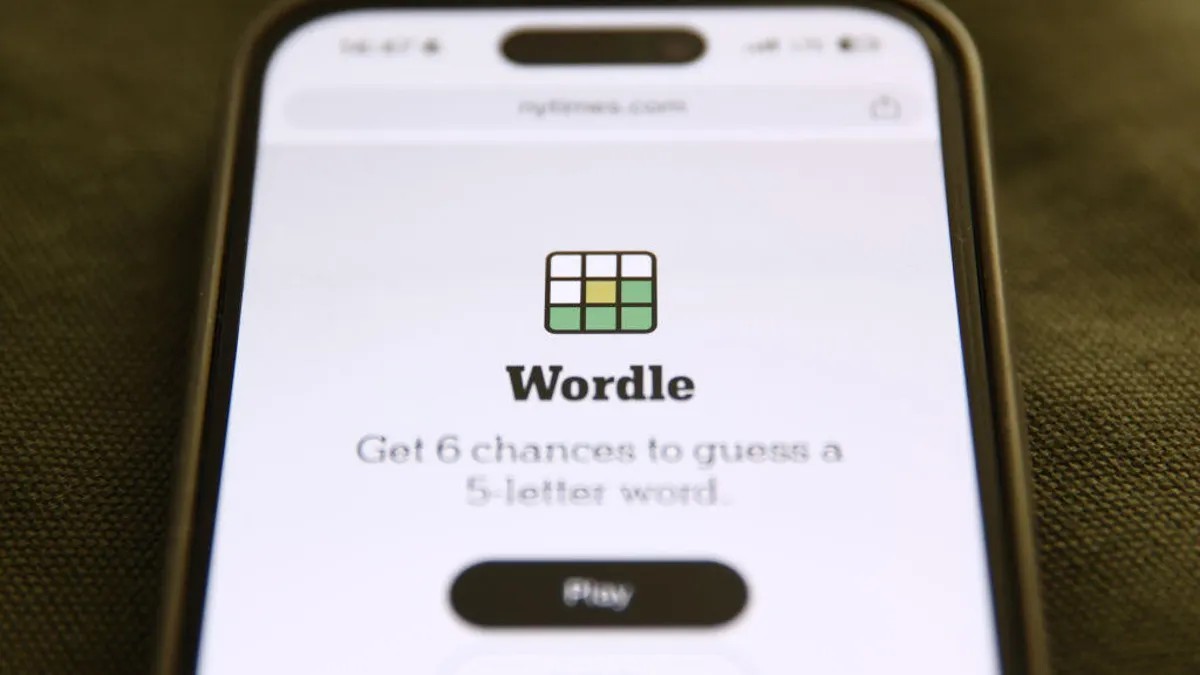
For many Wordle enthusiasts, the daily puzzle is a ritual of intuition. Players often rely on a “lucky” rotation of words—like TRAIN or CLOSE —relying on gut feeling rather than linguistic probability. However, treating Wordle as a game of luck is a risky strategy. To maintain a long winning streak, players should move away from guesswork and toward mathematical optimization.
The Power of Letter Frequency
The secret to a successful Wordle opening is not finding “cool” or obscure words, but rather maximizing your exposure to the most frequent letters in the English language. Because Wordle is a game of elimination, your first move should aim to narrow down the possibilities as much as possible.
To find the most effective starting letters, we look to the Oxford English Dictionary (OED). While their specific analysis of the Concise Oxford English Dictionary dates back to 2004, the data remains highly relevant. Unlike pop culture or technology, the fundamental building blocks of the English language—the alphabet—do not change.
The Linguistic Hierarchy
According to the OED analysis, the distribution of letters is heavily skewed. Understanding this hierarchy can drastically change your approach to the game:
- The Vowel Advantage: The letter E is the undisputed heavyweight of the English language, followed closely by A. In terms of sheer utility, the letter E is over 56 times more common than the letter Q.
- The “S” Factor: When it comes to word structure, the letter S is the most frequent starting letter in the English lexicon.
- The Outliers: Letters like J, Q, X, and Z appear far less frequently. While they are essential for specific words, using them in an opening move is statistically inefficient. Interestingly, the data shows that J is actually used less frequently than both X and Z.
Why This Matters for Your Strategy
In Wordle, every turn is a resource. If you use a starting word filled with low-frequency letters (like “JAZZ” or “QUARTZ”), you are essentially wasting your first opportunity to gather information.
By prioritizing words that contain E, A, R, S, and T, you are playing the “averages.” This doesn’t guarantee a win on the first try, but it significantly increases the probability that you will receive “green” or “yellow” feedback, allowing you to solve the puzzle in fewer moves.
The Bottom Line: A winning Wordle strategy isn’t about finding the right word; it’s about using the most common letters to eliminate the most wrong ones.
Conclusion: To protect your winning streak, stop playing by instinct and start playing by the data. Prioritizing high-frequency letters like E and A is the most reliable way to master the game.