




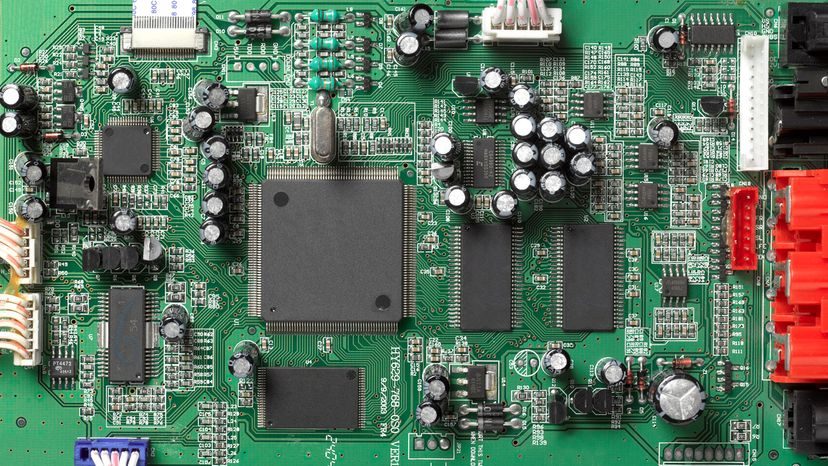
Think of a capacitor as a battery’s simpler, faster cousin. They both hold electrical charge, but the mechanism is entirely different. If you understand how a battery works, you know it relies on chemical reactions. One terminal pumps out electrons while the other sucks them in once you close the circuit. A capacitor doesn’t generate anything new. It just sits there, ready to hoard electrons.
The name gives it away. It has the “capacity” to store energy. Simple as that. No complex chemistry. Just storage.
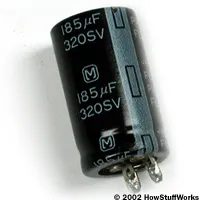
Capacitors are everywhere, even if you rarely see them. They range from the tiny plastic components inside a basic calculator to massive super capacitors capable of driving hybrid buses. To understand how they function, we have to look at their structure, their history, and the specific materials that make them work.
The Anatomy of a Charge
At its core, a capacitor is simple. It consists of two metal plates separated by a non-conducting material called a dielectric. The terminals connect to these plates. You can technically build your own with two sheets of aluminum foil and a piece of paper, though the storage capacity would be negligible.
The dielectric is the key. It dictates the capacitor’s purpose. Common materials include mica, cellulose, porcelain, Teflon, Mylar, and even air. The choice of dielectric determines whether the component is suited for high-frequency applications or high-voltage environments.
- Air capacitors are often found in radio tuning circuits.
- Mylar capacitors are standard for timer circuits in clocks and alarms.
- Glass capacitors handle high-voltage tasks.
- Ceramic capacitors thrive in high-frequency settings like antennas or medical imaging equipment (X-ray and MRI).
- Super capacitors provide the rapid power bursts needed for electric and hybrid vehicles.
How Charging Works
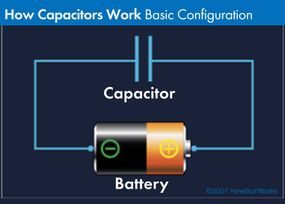
Connect a capacitor to a battery and the physics take over. The plate attached to the battery’s negative terminal accepts electrons. The plate connected to the positive terminal loses electrons to the battery.
Once the process completes, the capacitor holds the same voltage as the source. If you use a 1.5-volt battery, the capacitor charges to 1.5 volts. Size matters here. A small capacitor holds little charge. A large one, perhaps the size of a soda can, can store enough energy to power a flashlight for over a minute.
Nature demonstrates this principle on a grand scale. Lightning is essentially a capacitor in action. The cloud acts as one plate, the ground as the other, and the lightning bolt is the discharge between them. The sheer scale of this natural capacitor allows it to hold a massive charge.
Let’s say you hook up a capacitor like this:
The Dimming Bulb Experiment
Connect a battery, a light bulb, and a large capacitor in a simple circuit. Watch what happens. When you close the circuit, current surges from the battery to the capacitor. The bulb flares bright, then gradually dims as the capacitor fills up with charge. Once the capacitor reaches full capacity, the current stops. The bulb goes dark.
Now, remove the battery. Short the terminals with a wire. The capacitor becomes the source. Current flows from one plate to the other. The bulb lights up again, briefly, then fades as the stored energy drains away. It’s a complete discharge cycle. You see the storage and release of energy in real time.
This simple setup illustrates the core function of how a capacitor stores charge. It doesn’t generate power. It hoards it. Then, when the demand spikes or the source vanishes, it lets it go.
The Water Tower Analogy
Thinking of electrons as water makes the abstract concrete. Imagine a water tower connected to a town’s plumbing.
When the local pumps are working hard and the town isn’t using much water, the excess pressure pushes water up into the tower. The tower acts as a buffer. It stores potential energy in the form of height and pressure.
Later, when everyone turns on their showers at six in the morning, the demand spikes. The pumps can’t keep up alone. The water tower releases its stored water, boosting pressure and keeping the system stable.
A capacitor does the exact same thing, but with electrons. It stores charge when supply exceeds immediate demand. It releases that charge when the circuit needs a boost. It smooths out the flow. It prevents voltage spikes from frying components. It fills in the valleys when voltage drops.
Understanding the Farad
So, how much can it hold? That’s where the Farad comes in. It’s the unit of capacitance. One farad represents a massive amount of charge storage. Most capacitors you’ll encounter in everyday electronics are measured in microfarads (µF), nanofarads (nF), or picofarads (pF).
The size matters. A larger capacitor holds more charge for a given voltage. It takes longer to charge and longer to discharge. That’s why the bulb dimmed slowly in our first example. The “tank” was big. The flow was steady.
Capacitors are everywhere. They filter noise in audio equipment. They stabilize power supplies. They store energy in camera flashes. They keep memory alive in your computer when the power flickers.
Why This Matters to You
You might not see a capacitor often. But it’s in your phone charger. In your laptop. In the LED strip under your kitchen cabinets. Without it, the power would be jagged. Unstable. The electronics would stutter. Fail.
The types of capacitors and their uses range from tiny ceramic discs on a circuit board to large cylindrical aluminum electrolytics in old TVs. Each type has a role. Each has a limit.
We’ve seen how they charge. How they discharge. How they mirror a water tower. Next, we’ll look closer at the different varieties. How they’re built. Why some are polarized and others aren’t. And which one you should pick when your project needs a little extra stability.
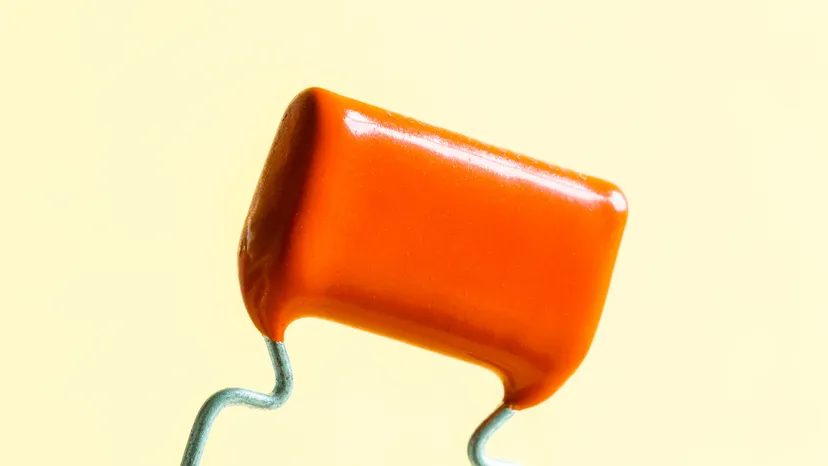
Capacitance is how we measure a capacitor’s storage potential, and the standard unit is the farad. But before you start thinking about grabbing one off the shelf, remember this: a single farad is massive. To put it in physical terms, a 1-farad capacitor is often the size of a tuna can or a 1-liter soda bottle. This sheer bulk is why most electronic components use microfarads (millionths of a farad) rather than whole farads.
The math behind the magic is straightforward if you look at the electron flow. One farad stores one coulomb of charge at one volt. A coulomb is a staggering 6.25 x 10^18 electrons. Since one amp equals one coulomb of flow per second, a 1-farad capacitor essentially holds one amp-second of electrons at 1 volt.
The Scale Problem
Why does size matter? Because storing significant energy in a capacitor is impractical unless you crank up the voltage.
Compare it to an AA battery. That small cylinder holds about 2.8 amp-hours. At 1.5 volts, it can power a 4-watt bulb for over an hour. If you tried to replicate that 2.8 amp-hour capacity using only capacitors at 1 volt, you would need roughly 10,080 farads of storage.
To store the energy of a single AA battery in a capacitor at 1 volt, you need 10,080 farads.
If one farad is the size of a soda bottle, 10,080 farads is a warehouse-sized problem. Batteries win on energy density for long-term storage. Capacitors win on speed.
Rapid Discharge and Safety Risks
The core difference between a capacitor and a battery isn’t just size; it’s release velocity. A battery discharges slowly over minutes or hours. A capacitor can dump its entire charge in a fraction of a second.
This rapid discharge is exactly why camera flashes use them. A battery trickle-charges the flash capacitor over several seconds. When you press the shutter, that capacitor dumps all its stored energy into the flash tube almost instantly. The result is a blindingly bright burst of light that lasts only microseconds.
High-power lasers use the same principle, achieving instantaneous, intense flashes that would melt a battery instantly. But this speed comes with a danger. Large capacitors can retain lethal charges long after power is cut. That is why TVs and camera flashes carry warnings: opening them up can expose you to a high-voltage shock that can kill you.
Circuit Functions Beyond Storage
Capacitors do more than just sit there waiting to explode. They perform three critical roles in electronic circuits:
- High-Speed Energy Reserves: As seen in flashes and lasers, capacitors provide bursts of power that batteries simply cannot match in duration.
- Voltage Smoothing: Power supplies often have “ripples” or spikes. A large capacitor acts like a shock absorber, absorbing voltage peaks and filling in the valleys to create a steady DC line.
- DC Blocking: A capacitor blocks direct current (DC) once it charges, but it allows alternating current (AC) to pass through. Because AC fluctuates, the capacitor continuously charges and discharges, effectively letting the signal flow while blocking any steady DC offset.
The Duel for Invention
Who actually invented the capacitor? It depends on who you ask, as history often favors the better-publicized name.
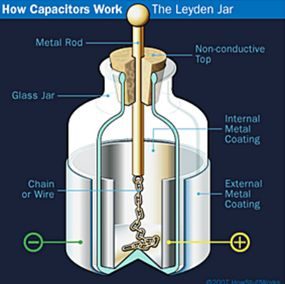
Records point to German scientist Ewald Georg von Kleist, who invented the device in November 1745. However, a few months later, Dutch professor Pieter van Musschenbroek at the University of Leyden created a nearly identical device. He called it the Leyden jar, and it became the standard reference for early capacitors.
Kleist lacked detailed records and the academic prestige of his Dutch counterpart. For centuries, he was overlooked. Today, historians recognize that their work was independent and coincidental. Both men get equal credit now, but the name “Leyden jar” stuck, reminding us that in science, visibility often matters as much as discovery.
From Jars to Farads: The Capacitor’s Evolution
The original Leyden jar was brutally simple. Take a glass jar. Fill it halfway with water. Line both the interior and exterior surfaces with metal foil. The glass itself served as the dielectric, the insulator keeping the charges apart, though early researchers mistakenly believed the water was the active component. A metal chain or wire typically pierced a cork stopper at the top, dangling into the liquid. Hook that chain to a static generator. The jar would then hoard two equal but opposite charges in a tense equilibrium. Connect them with a wire, and you got a spark. Or a shock.
Benjamin Franklin played with these jars. He found that a flat sheet of glass worked just as well as a curved one. This insight led him to invent the flat capacitor, also known as the Franklin square. He stripped away the jar. He kept the principle.
Decades later, English chemist Michael Faraday took the concept and made it practical. He wasn’t just playing with sparks anymore. He was trying to store unused electrons from his experiments. The result was the first usable capacitor, constructed from massive oil barrels lined with metal. This wasn’t just a lab curiosity. It was the foundation for delivering electric power over great distances. Without Faraday’s work, the grid as we know it wouldn’t exist. His achievements in this field were so significant that the unit of measurement for capacitance was named the farad in his honor.
Capacitor FAQ
What does a capacitor do?
It allows for the very quick release of electrical energy in a way a battery cannot. Batteries drip energy. Capacitors dump it. Take the electronic flash of a camera. It needs a burst of power instantly. A battery can’t keep up. A capacitor can.
Can a capacitor kill you?
Yes. A large, charged capacitor—like those found in old TV sets or camera flash units—holds a dangerous charge. It can deliver a lethal shock. Do not assume they are safe just because the device is unplugged.
Is a capacitor a battery?
No. They are often confused because both store electrical energy. But their mechanics are completely different. A capacitor is simpler. It stores electrons. It does not produce them. A battery involves chemical reactions. A capacitor is just physical storage.
What is a capacitor?
It is an electrical component that draws energy from a source and stores it. Inside, you have terminals connecting to two metal plates. Between them is a non-conducting substance. When activated, that stored electricity releases in a fraction of a second.