



You’re ready to buy tickets. Cart is full. Checkout page loads. Then, the gatekeeper appears.
It’s a CAPTCHA.
The term stands for Completely Automated Public Turing Test to Tell Computers and Humans Apart. It’s an acronym that sounds like a mouthful, but the function is brutally simple. It’s a digital bouncer.
For you, the human, it should be trivial. A few clicks. A bit of squinting at distorted text. Nothing.
For a bot? It’s an insurmountable wall.
The entire purpose of a CAPTCHA is to stop malicious automation. It’s a Human Interaction Proof (HIP). If you can solve it, you’re likely a person. If you can’t, you’re probably a script trying to scrape data, spam inboxes, or flood a server.
The Evolution of the Test
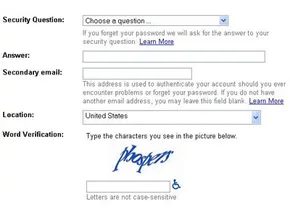
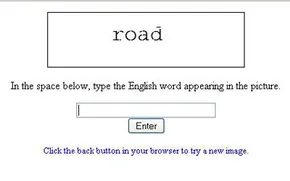
You’ve seen them all. The classic CAPTCHA is the one with the warped, colorful letters. You type what you see into a box. Match the characters, pass the test.
But text is getting easier for machines to read. So, the industry shifted.
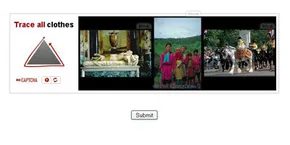
Now, you’re often presented with a grid of photos. A highway. A city street. A park. The prompt is specific: “Select all squares with traffic lights.” Or “Bicycles.” Or “Fire hydrants.”
This is the image recognition CAPTCHA.
It is significantly harder for bots to decipher than simple text. Why? Because computer vision models struggle with context. A blurry image of a fire hydrant might look like a red post to an algorithm. To a human, it’s obvious. The distortion isn’t just for style; it’s a deliberate friction point.
The goal is to craft a challenge that exploits human pattern recognition while breaking automated parsing.
Why Bother?
Why create a test that requires human effort?
Because someone is trying to game the system.
These bad actors are a minority. Most internet users are just trying to read the news or buy concert tickets. But the minority is loud and destructive.
Consider a free email provider. Without a CAPTCHA, a bot could register millions of accounts in seconds. Those accounts become the engine for a massive spam campaign. The CAPTCHA slows that down. It forces the bot to pause, think, and fail. It identifies the real humans from the automated parasites.
The Unintended Benefit
Here is the irony.
When a CAPTCHA fails—when a bot actually solves it—the designers aren’t exactly furious.
Why?
To solve a CAPTCHA, you have to teach a computer how to “see” and “think” like a human. Every time an algorithm bypasses a CAPTCHA, it represents a leap in artificial intelligence. The CAPTCHA acts as a training ground for machine learning.
The very mechanism designed to block AI ends up teaching it.
The Turing Connection
The name gives it away. It’s a reference to the Turing Test.
The original Turing Test, proposed by Alan Turing in 1950, asks whether a machine can exhibit intelligent behavior equivalent to a human. If a human evaluator can’t reliably tell the difference between a machine and a person, the machine passes.
CAPTCHAs flip this.
Instead of asking if the machine is human, it asks the user to prove they are. It’s a defensive Turing Test.
The Application Paradox
There is a strange loop in how these systems work.
A CAPTCHA application generates a challenge. It expects a specific answer. But if the application didn’t already know the answer, how could it verify yours?
It’s a paradox. The system must know the solution to validate the user.
“One of the ironies of the CAPTCHA program is that a CAPTCHA application can generate a test that even it can’t solve without already knowing the answer.”
This dependency creates a fragile security model. If the logic is flawed, or if the AI gets too good, the wall crumbles.
We are in an arms race. The bots get better at image recognition. The CAPTCHAs get more complex. Humans get more frustrated.
Is it worth the inconvenience?
For now, yes. Because the alternative is a web flooded with noise, spam, and automated chaos.
But as we dig deeper into the mechanics, one question remains: How long can we keep the humans ahead of the machines?
The roots of the current digital gatekeeping system lie in an experiment called the Turing Test. Alan Turing, widely regarded as the father of modern computing, proposed this framework to determine if a machine could exhibit intelligent behavior equivalent to a human.
Imagine a game of imitation. An interrogator communicates with two hidden participants: one human, one machine. The interrogator cannot see or hear them. If the machine can confuse the interrogator into believing it is human based on its responses, it passes the test.
CAPTCHA flips this script. The goal is to create a challenge that humans can solve effortlessly but automated bots cannot. It also has to be dynamic. If you presented the same static image to every user, a spammer would eventually crack the code and automate the input.
Why Visual Tests Are Complicated
Most, though not all, CAPTCHAs rely on visual distortion. Computers still struggle with the nuance of visual data processing. Humans are naturally adept at spotting patterns, even when they aren’t there. This is called pareidolia. You see a face in the moon. You see a shape in the clouds. Your brain forces order onto chaos.
Computers don’t have that instinct. They need explicit, structured data. By obscuring text or images, developers exploit this gap in machine learning capabilities.
Alternatives for Accessibility and Security
Relying solely on visual tests creates a barrier for visually impaired users. A web page administrator risks disenfranchising a segment of their audience if they don’t offer alternatives.
Audio CAPTCHAs solve this. The system plays a series of spoken letters or numbers. The audio is often distorted. Background noise is layered in. This makes it difficult for speech-to-text recognition software to parse the input, while a human listener can still discern the characters.
There is also a contextual CAPTCHA. This asks the user to interpret a short passage of text. It tests comprehension. Programs can identify keywords in a sentence. They are terrible at understanding the actual meaning of those words. A bot might find the word “apple” but won’t know if you are talking about a fruit or a tech company.
When Even Humans Get Stuck
Sometimes the distortion goes too far. A CAPTCHA might present an image or sound so garbled that no one can decipher it. This is why most implementations offer a “refresh” option. You can generate a new challenge and try again.
Hopefully, the second attempt is clearer than the first.
Who Uses CAPTCHA
The question isn’t really who uses it. The question is who is forced to endure it. Any site that values data integrity over user convenience will likely use some form of verification.
Websites that handle sensitive information use it to prevent automated attacks. E-commerce platforms use it to stop ticket scalpers. Forums use it to reduce spam comments.
The underlying principle remains the same. Verify you are a human. Then let you do what you came to do.
But as bots get smarter, the challenges get weirder. What happens when the test starts testing things humans shouldn’t have to learn? That’s a question for another time.
CAPTCHA isn’t just a roadblock for humans. It’s the primary filter keeping automated scripts out of online polls. The risks of skipping this step are real. Look at a 1999 Slashdot poll asking which graduate school had the best computer science program. The result was a mess.
Students from Carnegie Mellon and MIT built bots to vote for their schools. These automated programs churned out thousands of votes for their respective institutions. Meanwhile, other schools languished with only a few hundred votes each. If a script can rig a poll, who can trust the results? A CAPTCHA form stops programmers from exploiting the system. It forces a human to prove they’re not a bot before their vote counts.
Securing Free Accounts and Preventing Spam
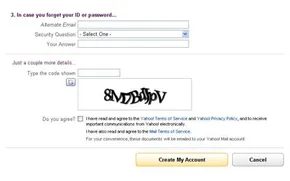
Registration forms use this technology to stop bot farms. Free web-based email services like Hotmail, Yahoo! Mail, and Gmail let anyone create an account. They rarely verify the personal info you provide. That freedom is a target for spammers. Without a filter, a bot could generate hundreds of spam accounts in minutes. A CAPTCHA acts as a gatekeeper. It ensures that the person creating the account is actually typing, not running a script.
Fighting Ticket Scalping
Ticket brokers like TicketMaster face a different threat. They need to stop scalpers from buying out events in seconds. Without a CAPTCHA application, a scalper can use a bot to place thousands of orders instantly. Legitimate fans are left empty-handed as events sell out before they can click “buy.” Scalpers then resell those tickets at a markup.
A CAPTCHA doesn’t eliminate scalping entirely. It raises the barrier. It makes large-scale automated purchases difficult enough to deter most script kiddies. It protects the average user from being priced out by algorithms.
Filtering Message Boards and Contact Forms
Many websites use CAPTCHA to manage their message boards or contact forms. Visitors can post messages or email administrators directly. Without a filter, these channels become flooded with spam. A CAPTCHA program filters out the noise. It doesn’t stop a determined human from sending a rude message. But it does stop bots from posting automatically. This keeps the conversation focused on actual users.
The Double Duty of reCAPTCHA
The most common form requires typing a distorted word or number series. But some creators found a way to make this task useful beyond security. They digitized books. The application known as reCAPTCHA harnesses user responses to verify scanned paper content. Computers often fail to identify words in a digital scan. Humans are needed to verify the text. This allows search engines to index and search those documents.
Here is the mechanics of that process. An administrator scans a book. The program selects two words from the image. It already knows the answer to one of them. If you type the known word correctly, the system assumes your input for the second word is correct too. That second word enters a pool for other users. As more people type it, the application compares their inputs to the original answer. Eventually, the consensus verifies the word. It moves to a verified pool.
It sounds tedious. But the CAPTCHA is pulling double duty. It verifies the digitized book content while confirming you are human. You gain access to the service you want.
Building the Challenge
Creating these challenges involves more than just slapping text on an image. The next step involves understanding the technical process behind generating these distortions and ensuring they remain solvable for humans while blocking optical character recognition software.
CAPTCHAs only work if you understand the gap between how machines think and how humans perceive the world. Machines are rigid. They follow instructions. If an input doesn’t fit the script, the system freezes. Humans are messy, adaptable, and often intuitive.
Designing a CAPTCHA means exploiting that disconnect.
If you build a visual CAPTCHA and leave the answer in the image metadata, you’ve already lost. Machines can read what humans can’t. A simple script can scrape that hidden data and bypass your security in seconds.
Distortion is non-negotiable. If your characters are clean and sharp, modern OCR software will read them instantly. You need to break the shapes. Stretch them. Bend them. Overlay noise. The goal is to make the image unreadable to a computer while still decipherable to a tired human.
The Database Trap vs. Random Generation
You might think pre-generating a library of CAPTCHAs is the safest bet. It isn’t.
According to Microsoft Research researchers Kumar Chellapilla and Patrice Simard, a robust CAPTCHA should yield an 80% success rate for humans and a 0.01% success rate for machines.
If you pre-store every possible solution in a database, you create a single point of failure. A spammer doesn’t need to solve the puzzle. They just need to steal the list. With a database of 10,000 or more pre-generated images, a bot can run a brute force attack, trying every stored answer until one sticks.
Randomization breaks this model.
When a CAPTCHA generates a unique string of letters and numbers on the fly, the odds of a bot guessing correctly drop to near zero. The longer the string, the better. You eliminate the database entirely. No list to steal. No pattern to exploit.
Visual Tricks That Actually Work
How do you distort these random strings?
Some CAPTCHAs mimic the look of text seen through melted glass. Letters stretch and warp in impossible ways. Others place the text behind a crosshatched grid of lines, breaking up the contours that computer vision algorithms rely on. Some use color inversion or scatter dots across the background.
The specific method matters less than the result: make it hard for a computer.
Not all tests are visual, though. Some rely on logic. You might see a sequence of shapes and be asked to pick the next one in the pattern. This tests human intuition and pattern recognition.
It’s a risky move. Not everyone is good at spotting abstract patterns. When human success rates dip below 80%, the CAPTCHA becomes a liability, not a shield. You start locking out real users to keep bots out. That’s a losing trade.
The Audio Alternative
Audible CAPTCHAs follow similar logic but with sound.
In a pre-recorded system, a voice speaks every possible combination. The server matches the audio file to the expected answer. It’s vulnerable to the same brute force attacks as visual databases.
The randomized approach is safer. The system pre-records individual characters. When a CAPTCHA is generated, it strings these audio clips together in a random order. The user listens and types what they hear.
“The odds of a bot entering the correct series of random letters are very low.”
This method removes the need for a massive library of full-word audio files. It’s lighter, harder to brute force, and accessible to visually impaired users.
But audio isn’t a silver bullet. Background noise, poor mic quality, or accents can still cause errors. And as we’ll see in the next section, machines are getting better at listening, too.
The real hurdle in defeating a CAPTCHA isn’t the reading part. Humans should nail that 80 percent accuracy mark with ease. The actual engineering nightmare is teaching a machine to process visual data the way a human brain does. Spoiler alert: most attackers don’t bother building smarter AI. They just make the problem easier for the dumb bot to solve.
Take a standard text-based CAPTCHA. You know the drill. English words warped into submission. Stretched. Bent. Warped into illegibility. Throw in a chaotic, randomly generated background and you’ve got a decent barrier for a script kiddie. But a determined programmer breaks this down into phases.
First, strip the color. Convert the image to grayscale. That single step removes a layer of obfuscation the designers worked hard to implement. Next, the algorithm hunts for patterns in the black-and-white pixels. It compares these shapes against a library of “normal” letters. If the match is fuzzy, the code cross-references those partial matches with a dictionary of actual English words. It fills in the blanks with statistical guesses. Submit. Repeat. It’s crude. It’s not 100 percent effective. But it’s good enough to keep spam filters busy.
Cracking the Gimpy
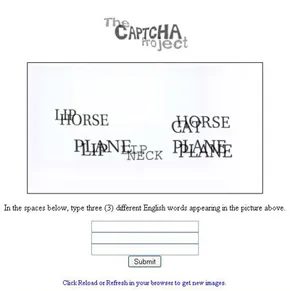
Things get trickier with more complex implementations like the Gimpy CAPTCHA. This version displays ten English words. The fonts are still warped, but the background is irregular and the words overlap in pairs. To proceed, a human must correctly type three specific words from the jumble.
Is this bulletproof? Not really.
Researchers Greg Mori and Jitendra Malik published a paper detailing exactly how to dismantle this system. Their breakthrough relied on a fundamental flaw: Gimpy uses actual dictionary words, not random alphanumeric strings. This structural predictability is a gift to an attacker. Mori and Malik’s algorithm focused on identifying the beginning and end of letter strings, using Gimpy’s internal 500-word dictionary as a reference map.
The results were startling. Their algorithm correctly identified the words 33 percent of the time. On paper, that looks like failure. In the spam industry, it’s a goldmine. If a bot can break the code one-third of the time, and it can run three hundred attempts per minute, the volume of successful intrusions becomes massive. You don’t need perfection. You just need volume.
You don’t need a perfect bot. You just need a fast one that fails less than 70 percent of the time.
Electronic Ears
Text isn’t the only target. Audio CAPTCHAs promised to be the safe harbor for those who couldn’t solve visual puzzles. They failed.
By the spring of 2008, reports surfaced that hackers had broken Google’s audio verification system. The method wasn’t about listening with human ears. It was about building a library of sounds. Since the audio tracks were distorted, a single character like “A” might sound like a dozen different variations. The attacker had to categorize every possible sonic variant.
Once the library was built, the process was simple. The spammer used a modified version of voice-recognition software to interpret the incoming audio stream. The bot didn’t “hear” the letters. It matched the audio waveforms against its pre-built database. The result? Audio CAPTCHAs, once touted as the ultimate fallback, were reduced to noise.
CAPTCHA and Artificial Intelligence
The cycle never really stops. As soon as one method gets patched, the next generation of bots learns to bypass it. We’re moving past simple pattern matching into the realm of deep learning, where neural networks are trained on millions of CAPTCHA images. They don’t just look for letters anymore. They look for context. They look for the shapes of houses, the faces of strangers, the traffic lights of a digital intersection.
But here’s the thing. The more advanced the bot gets, the more annoying the CAPTCHA becomes for the actual human. You want a strong security barrier? You’re going to get a puzzle that requires you to squint at a pixelated image of a crosswalk. You’re going to get audio that sounds like a robot choking on static.
The arms race between security engineers and attackers isn’t about creating an unbreakable lock. It’s about raising the cost of the attack higher than the potential profit of the spammer. For now, that cost is still just your patience. And that’s a currency everyone is running out of.
The Uncomfortable Truth: Your Defeat Is AI’s Victory
Luis von Ahn, a computer scientist at Carnegie Mellon University and one of the original inventors of CAPTCHA, sees the ecosystem differently than the average web user. In a 2006 lecture, he highlighted a paradoxical relationship between spam prevention and artificial intelligence. CAPTCHA acts as a gatekeeper. Hackers and spammers are forced to dedicate significant time and computational resources to breaking these barriers. When they succeed, it proves that machines are becoming more sophisticated.
Every time a researcher teaches a machine to defeat a CAPTCHA, humanity takes a step closer to true artificial intelligence. For von Ahn, this is a win. A setback for the security tool is a milestone for AI. It is a strategic retreat that funds the advance of machine learning.
The Administrator’s Burden
Web administrators do not share this philosophical optimism. Their priority is not advancing AI; it is keeping their sites clean. They face a persistent, exhausting problem: bots.
Website maintainers and poll creators must recognize that many older CAPTCHA systems are no longer reliable. The tools that worked five years ago are now trivial for modern algorithms. If an administrator relies on outdated code, their site becomes an open invitation for spam.
Research is mandatory. You cannot set a security system and forget it. You need to know which CAPTCHA applications are still effective. When one system fails, you must be ready to rip out the code and replace it with a newer version. This is not a one-time setup. It is ongoing maintenance.
The Usability Trap
Designers of these systems walk a tightrope. As computers get smarter, the tests must evolve. But if the test becomes too hard, the system fails its primary purpose: verifying humanity.
If a human cannot solve the challenge with a decent success rate, the user experience collapses. The solution might move away from warped text. It might involve solving a mathematical equation or reading comprehension questions about a short story. But complexity has a cost.
How many people will bother posting a reply to a message board if they first have to solve a quadratic equation? The risk is real. As tests get more complicated, user interest drops. People leave. They go elsewhere. The security is perfect, but the site is empty.
From Boxes to Invisible Tracking
The industry has moved significantly since those early days. Google, which acquired reCAPTCHA in 2009, began phasing out the classic text-based service in 2014. They replaced it with No CAPTCHA reCAPTCHA. This was the simple checkbox: “I am not a robot.” It felt like magic. It was barely a test at all.
By 2017, even that was too simple. Google announced the removal of No CAPTCHA. The new standard is Invisible reCAPTCHA. It does not ask you to solve puzzles. Instead, it analyzes your behavior. It looks at how you move your mouse. It checks your browsing habits. It builds a risk profile in the background.
You usually do not see anything. If the system is confident you are human, you proceed. If you seem suspicious—if you are actually a bot, or acting like one—you might be hit with the old challenges. It is a layered approach. The easy path is for humans. The hard path is for anyone who looks like a machine.
Quick Answers to Common Questions
Is CAPTCHA owned by Google?
No. CAPTCHA is a general technology. It is a challenge-response test used across the web to distinguish humans from automated software. Google owns reCAPTCHA, a popular implementation, but not the concept itself.
What does the acronym CAPTCHA stand for?
It stands for “Completely Automated Public Turing test to tell Computers and Humans Apart.”
Why is CAPTCHA still needed?
It prevents automated programs from submitting false data, creating fake accounts, or flooding pages with spam and scams. Without it, the open web would be unusable.