


Most people aren’t built for the adrenaline spikes of skydiving or police chases. We prefer watching from a safe distance. That’s where action cameras come in. They bridge the gap between thrill-seekers and the rest of us. You get the high-definition footage. You don’t get the broken bones.
The technology has come a long way since the messy early days. Today’s devices are sleek and waterproof. Back in 1987, things were different. Mark Schulze, a mountain biker and video enthusiast, tried to capture his rides. He bolted a bulky VHS camera to a helmet. It was heavy. It was awkward. It worked. He used early versions of what we now call GoPro, Sony, and iON cameras. Those pioneers started a trend that exploded decades later.
Now, anyone can strap one on. The uses have expanded far beyond extreme sports.
Beyond the Adrenaline Rush
Football teams use them to break down plays. Firefighters wear them to ensure their procedures follow protocol. Police officers use body-worn versions to create an objective record of their interactions.
Surfers get shots of waves they couldn’t hold. Skiers capture mountainsides that blur past too fast for the naked eye. It’s about perspective. A first-person view changes everything.
But it’s not all fun and games. The privacy concerns are real. Some argue these cameras invade personal space, especially during emergencies. A township in Pennsylvania banned firefighters from wearing them. The logic was simple. You don’t want someone filming you while you’re in your underwear or dealing with trauma. The town commissioner put it bluntly: “I don’t want somebody coming in my house and filming … my wife might be in her negligee.”
Employers worry about liability. Video evidence can be damning. Look at the Asiana Airlines crash in San Francisco. Footage showed a survivor being run over by a fire rig. She died instantly. The video was gruesome. It proved the chaos of the scene. It also opened the door for legal battles.
Despite the backlash, adoption is growing. People want to see the world through another pair of eyes.
Sports and First-Person Perspectives
I saw one in action at my son’s T-ball game. It was mounted on a four-year-old’s batting helmet. He rounded the bases for the first time. His parents likely had a standard camera too. But the helmet cam showed the world from his height. It captured the scale of the field from a toddler’s view. It’s a unique memory keeper.
Professional sports tried this earlier. In 1991, Kerwin Bell, a quarterback for the World League of American Football, wore one. Audiences saw what he saw. He called plays. He scored touchdowns. He dodged sacks.
The players hated it. Critics called it cheating. How do you defend against a play you can see coming? The device was also bulky. It was cumbersome. The technology was rejected for years.
That changed by 2015. Arena football leagues brought live-action helmet cameras back. They wanted to thrill the fans. College officials are testing it too. Their goal is coaching, not just entertainment. Staff can see exactly what players do. Play calls become easier to analyze when you have that eye-in-the-sky view.
The Extreme Edge
Most users are adrenaline junkies. They ski down mountains. They parachute through clouds. They ride motorcycles on highways. They capture every second. It’s a way to relive the thrill. It’s also a way to share unique sights without stopping. You don’t need to pull over to take a photo of wildlife. You just keep riding.
Some people tempt fate. One cyclist leaned into a rattlesnake attack. The snake struck his helmet cam. We advise against that. It’s a bad idea.
Divers use them to document encounters. One scuba diver filmed his interaction with a 12-foot great white shark. He had to poke it with a spear. The shark eventually left. The video captured behavior that would be hard to describe later. You can’t fully convey the scale and speed of a shark attack in words.
Athletes also use them for charity. Jump4Heros raises funds for military support groups. Skydivers upload breathtaking videos. Donors see the extraordinary lengths the team goes to. It’s effective marketing. It’s also genuine storytelling.
Insight into the Deep
Marine biologists used to guess about shark behavior. They relied on limited observations. Now, they have data. Cameras mounted on predators offer direct insight. You see feeding habits. You see movements. You see interactions in real-time. It changes how we understand the ocean’s apex predators.
The Transparency Trap in Law Enforcement and Military
Helmet cams strip away ambiguity. That is their primary value proposition. But for agencies, that clarity is a liability.
Consider the footage from a fatal SWAT raid in Arizona. The video showed exactly what happened. No more debating witness credibility. No more “he said, she said.” The truth was binary and undeniable. This transparency protects officers when they follow protocol. It destroys them when they don’t.
Agencies fear the lens. It exposes every deviation from the rulebook. One mistake, captured in high definition, becomes grounds for lawsuits, public outrage, and career suicide.
“It can protect them in cases involving suspected wrongdoing, but it can also do exactly the opposite if everything wasn’t followed to the letter of the law.”
The military faces similar risks. Take Pfc. Ted Daniels. He wore a helmet cam during his service in Afghanistan. The footage was meant for internal review only. Instead, it ended up on YouTube. By early 2015, it had over 29 million views.
The public reaction was polarized. Some saw heroism. Daniels drew fire to save his unit. Others saw recklessness. Daniels himself admitted it wasn’t “tactically brilliant.” But the risk wasn’t just public opinion. Higher-ups noted the footage could be weaponized. The Taliban could use it for propaganda. Criminals could use it to learn police tactics.
Public record means public analysis. And analysis can be deadly.
Civilian Use: Insurance and Accountability
Urban cyclists have adopted helmet cameras for different reasons. They aren’t afraid of enemy fire. They are afraid of car doors and distracted drivers.
Automobile accidents are rife with hearsay. Cyclists are often blamed outright for collisions. Wearing a helmet cam is an insurance policy. It provides concrete evidence for insurance companies. It prevents insurers from shifting blame to the rider.
Dave Sherry, a cyclist in London, takes this further. He records poor driving and submits the footage to police for prosecution. His motive is civic duty. The result is often physical threats from angry motorists.
The technology protects the wearer, but it also invites conflict.
Buying and Using Helmet Cameras: Practical Advice
Not all helmet cameras are created equal. Choosing the right one depends on your use case. Are you looking for proof for insurance? Do you need high-resolution footage for legal proceedings? Or do you just want to document your rides?
Resolution and Frame Rate
For legal evidence, resolution matters. 1080p is standard. 4K is overkill for most but captures finer details like license plates. Frame rate is equally important. 30fps is smooth. 60fps captures fast motion better, reducing blur in high-speed incidents.
Battery Life and Storage
Helmet cams drain batteries quickly. Continuous recording at high resolution consumes power fast. Check the advertised battery life. Consider carrying a spare. Storage is another bottleneck. A full hour of 4K video can take up gigabytes. Use high-endurance SD cards designed for constant writing and erasing.
Mounting and Stability
A shaky video is useless. Ensure your mount is secure. Vibration dampening helps. If the camera moves relative to your helmet, the footage becomes disorienting and less credible in court.
Privacy and Legal Considerations
Recording in public is generally legal in many jurisdictions. But be aware of local laws. Some areas have specific rules about audio recording. Two-party consent states require both parties to agree to be recorded. Check your state’s laws before you ride.
Post-Processing and Evidence Preservation
Raw footage is powerful. But it can be challenging to present. Time-stamps and geotags add credibility. Keep the original files. Don’t edit the footage if it’s intended for legal use. Editing can compromise its integrity. Provide unaltered files to authorities or insurance adjusters.
The lens doesn’t lie. But it can complicate everything. Whether you are a soldier, an officer, or a cyclist, the camera changes the dynamic. It forces accountability. It invites scrutiny. And it creates a permanent record of moments that might otherwise be forgotten.
The question isn’t just what you see. It’s what others do with what they see.
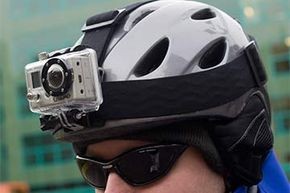
A rose by any other name is still a rose. Same goes for helmet cams. You might see them called lipstick cameras, bullet cameras, or micro-video cameras. The name doesn’t matter as much as the function. A true helmet camera is built to attach to headgear. It gives you the real point-of-view (POV) of the user.
Cameras come in two main forms. Some are all-in-one units. These are the smallest and lightest options. They lack the annoying cords and bulky recording units of older designs. Then you have the two-piece setups. They usually include a screen. That screen helps you review footage. It also ensures you mount the camera correctly. You can shoot at the exact angle you want. No more blind guessing.
Key Features for Helmet-Camera Selection
Resolution matters. If you are shooting a POV documentary, you need higher resolution. Capturing a kid’s T-ball game is different. You don’t need the same quality there.
Recording time is another factor. How much space do you have?
Durability is non-negotiable for some. Is the camera waterproof? Can it take a shock? If you are into extreme sports, these features are essential.
Battery life should last five or six hours minimum. You don’t want it dying in the middle of a ride.
Internal memory is limited on many models. If yours doesn’t have much, get a memory card.
Sound recording is standard, but if you want to narrate, check for a microphone.
Wi-Fi is useful if you want to transfer files wirelessly.
Accessories expand your options. You can buy helmets, straps, pole mounts, and harnesses. These make using the camera easier.
Mounting and Shooting Tips
After you buy the gear, you have to use it. Most of the process is trial and error. How you mount the camera affects the shake. It also changes the angle. Since you can’t adjust the camera while moving, you must anticipate where it needs to be.
Angle the camera slightly lower than your eyes. Look straight ahead. If you are filming friends on surfboards or snowboards, go even lower. Capture their legs and feet.
Minimize camera shake. Nobody wants seasick viewers.
Don’t rely solely on the POV. Get establishing shots. Record interviews. You need varying material for editing later.
Common Questions About Helmet-Camera Use
Can you have a camera on your helmet? Yes.