



The technology industry thrives on conflict. The conflict between PCs and Macs has been a topic of discussion for decades. Microsoft, Apple, and Google have traded blows in high-profile squabbles. Patent wars between giant companies have been raging for years. But a newer, more specific battle is emerging in the low-cost tablet market. Two companies are competing for dominance, entering the space through the same door: electronic publishing.
Competitors include Amazon, which sells the Kindle Fire tablet, and Barnes & Noble, which sells the Nook tablet. 📚
These devices share a common ancestor. These have evolved from dedicated e-book readers. These early gadgets used e-ink screens to display black and white text. This technology is provided by a company called eInk. The resulting device is portable. It can hold a huge library. Power consumption is almost negligible.
The new tablet takes things one step further. They ditched electronic ink in favor of color LCD screens. Added touch screen user interface. You can now display multiple media types. You can continue reading on any device. This is still a key feature. But you can also watch movies. listen to music. Surf the web. Send an email. play games. Run thousands of different applications. The question is which platform offers a better experience for everyday users. We will compare and contrast the contenders to see which one stands out.
The Tale of the Tape
To understand the competition, we need to look at the specifications. Both devices are aimed at budget-conscious consumers. They provide gateways to their respective ecosystems. Amazon is pushing the Kindle Fire into the center of content consumption. Barnes & Noble positions its Nook tablet as a platform for reading and browsing.
Why this competition matters
This is not just a hardware issue. It all depends on where you buy your content from. If you buy a Kindle Fire, you’re more likely to stay in the Amazon ecosystem. The integration between your device and the Kindle Store is very tight. Nook tablets offer a similar experience for Barnes & Noble customers. Your choice of tablet often determines your content purchasing habits.
Key Differences in Approach
Amazon focuses on a wide range of media. Kindle Fire was originally designed as an entertainment device. Strong support for video streaming and web browsing. Barnes & Noble continues the tradition of reading with the Nook brand. Although the Nook tablet has added colors and applications, the user interface is still optimized for book lovers.
Which One Should You Choose?
The answer depends on what is most important to you. If you want a great device for video and general browsing, the Kindle Fire is a great choice. If readability and a simple user interface are a priority, the Nook tablet may be more attractive. Let’s take a closer look at the details of each device so you can decide.
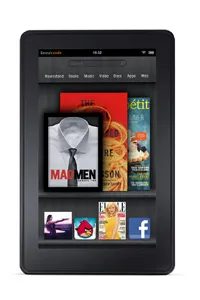
The hardware details reveal that the two 7-inch tablets are almost identical twins. Both run a modified version of Android。 Both have touchscreens. You can download apps from the Google Store page, but neither method gives you full access to the entire Android ecosystem. This is a carefully curated experience.
Look at your processor. Both devices are powered by dual-core 1GHz chips. The screen resolution is 1024 x 600 pixels. Both have a standard 3.5 mm headphone jack. You can connect to a WiFi network. Mobile data cannot be added. No bluetooth. No GPS. There are no cameras.
For now, they are interchangeable. But dig deeper. That difference is important.
Memory and storage slot
When it comes to RAM, the Nook tablets have a clear advantage. The Kindle Fire follows suit at 512 MB. Extra memory helps you multitask and keep your apps running.
Storage is where things go wrong. The Kindle Fire offers 8 GB of flash memory. There are two versions of the Nook tablet. One model corresponds to Amazon’s 8GB option. The other is up to 16GB.
Both devices have an SD card slot. Storage can be expanded to a maximum of 32 GB。 However, the Nook has a problem. Barnes & Noble has limited some expansion space to purchasing content directly from its official store. You can’t just throw everything away. This is a walled garden within a garden.
Physical buttons and structures
Hardware is more than just chips. It depends on how you like it. Push things. Turn the knob.
Kindle Fire removes physical controls. There is only a power button. If you want to adjust the volume, you have to use the on-screen interface. This requires you to remove your finger from the screen or stop tapping the controls.
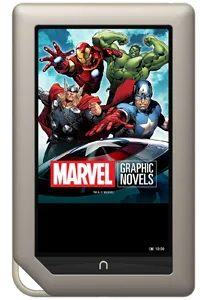
The Nook tablet still has physical buttons. It has a power button. You get a separate volume control. For many users, this makes a big difference in their quality of life.
Physical dimensions vary slightly. The corners are a bit long. If you want to record sound, the choice is clear. The Nook includes a microphone. Not so with Kindle Fire. You can’t talk about your fire book.
Hardware benefits
From a purely mechanical point of view, the Nook has an advantage. You can buy one with more memory. More storage space inside. Physical controls become more intuitive. The microphone adds functionality not found on the Fire.
But hardware is only half the battle. The real difference is elsewhere. It depends on what you do with the device.
table of contents
Why Prime benefits are more important than you think
Buying a Kindle Fire isn’t just about the hardware. This is your ticket to the Amazon ecosystem. Get Amazon Prime 1 month right out of the box. This means free 2-day shipping on stock items. In addition, you can use Amazon Prime Video. This includes TV shows and movies that you can’t find on other platforms.
Need Netflix or Hulu Plus? Kindle Fire supports their apps. All-in-one media center. However, after 30 days, Prime membership costs $79 per year. Is it worth it for your lifestyle?
Nook’s content strategy
Nook tablets also have similar applications. Hulu Plus and Netflix work well there. But Barnes & Noble doesn’t have a direct equivalent to Amazon Prime. They don’t offer free shipping or exclusive streaming libraries.
Instead, they rely on partnerships. You can try different video and audio providers for free. However, you will eventually have to pay to maintain access. There’s no an all-in-one monthly fee.
Digital Library: Late fees and catalog size
Amazon’s Prime Lending Library is a hidden gem. You get free access to over 140,000 titles. There are no late fees. You can keep it as long as the book is in the library. Of course, you need to keep your Prime membership active.
There are about a million e-books available for purchase in the Amazon store itself. This should be enough for most readers. But Barnes & Noble took another tack.
The king of e-books
Barnes & Noble claims to own more than 2.5 million e-books. That’s more than twice the size of Amazon’s catalog. For e-book lovers this is important.
Nook tablets do not have a lending library. However, Barnes & Noble gives away free books every Friday. If you primarily use reading, the Nook’s wide selection is a big advantage.
Make your final choice
The decision depends on your usage patterns.
If you want to watch videos or shop online, Kindle Fire is the way to go. Media selection and Prime benefits are unparalleled.
If you want to read, Nook Tablet offers the world’s largest e-book store. The number of books alone gives Barnes & Noble an absolute advantage.
Want to skip the conversation? Nexus 7 is an affordable Android tablet. It avoids the platform lock-in entirely.
Which features are most important to you?