




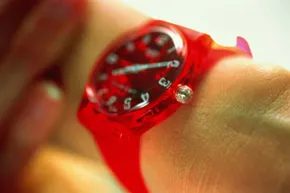
The clock on the wall says you are five minutes late. Your watch shows that you are perfectly punctual. The receptionist is right. You are wrong.
It feels like a conspiracy. You have bought a quality watch. They have the US Naval Observatory number 202-762-1401 to get it second. You are conscientious. You care about accuracy. Still, your device drifts somehow.
This isn’t just bad luck. It is a fundamental contradiction between human perception and mechanical reality. Whose time is really right? Is it the atomic precision of the navy’s servers or the swinging pendulum of the lobby clock? And most importantly, how accurate can you really expect your personal watch to be before it starts lying to you?
It’s enough to make you scream. Or at least listen to Chicago’s 1969 hit “Does Anyone Really Know What Time It Is?” If you don’t want to sing, that’s fine. Let’s look at the mechanics of the problem.
The Evolution of Measuring Moments
Timing is not a static performance. It’s a messy, repetitive story trying to capture something that doesn’t exist in physical form.
For most of human history, time was local. It was determined by the sun. It was noon when the sun reached its zenith in your particular valley or city. This worked well until the railways decided that train timetables required a uniform standard. Local solar time became a logistical nightmare. If every town had its own sun-based clock, you’d have to reset your pocket watch when you cross county lines.
The solution was the standard time zone. But even then, the tools we used to measure these zones were flawed.
Mechanical watches are based on balance wheels and springs. They are subject to temperature fluctuations, gravity and wear and tear. The spring loses tension. A gear loses lubrication. Accuracy varies. A typical mechanical watch can lose or gain 15-30 seconds per day. Over a month, that is ten minutes of error.
Quartz watches, which hit the mass market in the 1970s, improved this considerably. They use the vibration of the quartz crystal when it is energized. This vibration is stable. It is much less sensitive to temperature than a steel spring. A simple quartz watch may drift only a few seconds per month.
But even quartz isn’t perfect. Moisture, shock or simply the age of the battery can affect the frequency of the crystal.
Who is really right?
If you buy your watch with the US. If you sync with the Naval Observatory, the “time” will not sync. They are synchronized to a specific atomic clock standard. USNO uses cesium atomic clocks. This is the second definition of the International System of Units. Their accuracy is one second every 100 million years.
The clock on your wall is probably a quartz clock or perhaps a mechanical clock with a motor drive. It has no connection to the atomic standard. It is a standalone device. It follows its own schedule.
If your clock is also quartz, it will run independently of the wall clock.
That’s why according to your clock you’ll be “on time”, but according to the wall you’ll be “late”. Your watch and the wall clock have diverged.
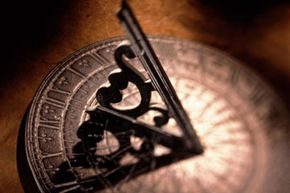
Early humans didn’t need clocks. A nomadic life of hunting and gathering does not require a local train or billing customers every 15 minutes. Time was something you felt, not something you measured. But civilization has changed the rules. With the division of labor and the growth of societies, efficiency became the new god.
Sundials were the first compromise to use the sun’s shadow as a day marker. The Egyptians went one step further. They needed their priest to know exactly when the night rituals needed to be performed, so they invented the water clock. It was a huge vase with a hole in the bottom where the hours were measured by the steady dripping of water. Mechanical clocks appeared in 14th century Europe. They were terrible. Accurate in just 15 minutes, they were more suggestions than standard. The situation changed at the end of the 16th century, when the Dutch scientist Christiaan Huygens introduced the pendulum clock. Suddenly, the measurement of time lost only 10 seconds a day.
Mass production followed. In the 1850s, the American Watch Co., Waltham, Massachusetts, produced spring-operated pocket watches. For the first time, you can carry time in your pocket. You can follow it wherever you go.
But getting the watch created a new problem. How much should the watch be?
In 19th century America, time was a local matter. There were hundreds of local times, each set according to the large clock in the courthouse or town hall. These clocks were synchronized at solar noon at that location. Result? When it was noon in Chicago, it was 11:40 a.m. in St. Louis and 12:18 p.m. in Detroit.
This chaos destroyed the growing railroad industry. The trains needed a reliable standard. The railroads solved the problem by synchronizing their clocks with the aerial observations of the Harvard College observatory. But local towns didn’t care about telegraphs. They cared about their own sun.
In 1883, the railroads pressed the issue. They divided the United States into four time zones, each with a standard time. Cities had to adapt or face economic isolation. The people of Maine hated it. They had to move their clocks back 25 minutes to what was called Philadelphia time. Finally they did. The people were in sync.
Then came the 20th century. Scientists moved from gears to crystals and then to atoms. Today, atomic clocks measure time in trillionths of a second. Because of this accuracy, all your devices will display the same time. That’s why you can meet someone at 3pm and expect them to be there.
Or can you?
How much does the clock accuracy vary and why?
You might expect your smartwatch to be completely accurate. It is connected to the Internet, which gets its time from atomic clocks. It should be flawless. That’s not it.
The differences between the devices are subtle, but real. In inexpensive digital devices, a common quartz clock can drift 15 seconds per month. The mechanical clock in a luxury wristwatch can vary by minutes each day depending on movement and position. Your phone? It synchronizes with network time and therefore remains stable until the signal drops. It then relies on its internal oscillator, which can heat up and shift as the chip heats up under heavy use.
Why is this important?
For you, it’s mostly a nuisance. Calendar invitations can seem a little strange. The video call may start a few seconds late because your device’s clock is ahead of the server’s clock. In industries like finance or electricity networks, the differences are catastrophic. High frequency trading algorithms are based on nanosecond accuracy. A deviation of even one microsecond can mean losses of millions.
The “perfect” time you see on your screen is a consensus. It is not a single source. It’s a negotiation between your device, the network, and a network of atomic clocks around the world. They are mean to each other. They smooth the edges.
But take a closer look at the hand used on a cheap mechanical watch. It doesn’t tick. It sweeps. It’s trying to catch up.
Is it really closed? Or does it just maintain the illusion that time is linear?
We trust the watch because we have to. Without them, schedules collapse. But the clock is not the truth. It’s a tool. That is, mechanical, even if the gears are siliconee and light.
Remember this the next time you look at the time
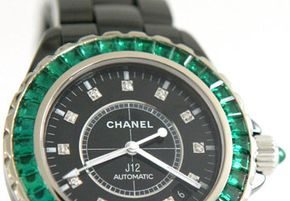
In the early 1970s, battery-powered quartz watches favored accurate timekeeping. Until then, this precision was the domain of scientists and engineers. The mechanism is very simple. When electricity is passed through a small crystal, it bends. This physical deformation produces a stable electrical signal. When you input a signal to the face of an electronic clock, time passes. At the beginning of the 21st century, this technology was already mainstream. The global market share of mechanical watches has dropped to just 13 percent.
In theory, the synchronization sounds perfect. The truth is, consumer quartz watches are far from perfect. These are inexpensive, mass-produced devices. These are not multi-million dollar lab equipment. Even the most expensive quartz watches sold in jewelry stores are subject to mechanical vibration. The frequency of this vibration can change. It depends on the size, shape and external conditions of the crystal.
No two crystals are alike. This means that two watches made from the same assembly line can be slightly different. Temperature and humidity also play a role. The same applies to the wear and tear of the small motors that generate the electric field. result? Quartz watches degrade over time.
The error of consumer quartz watches is typically 1/10-2 seconds per day.
Chronocentric.com estimates this daily loss. If left uncorrected for years, this difference can be minutes. But cheap is not always inaccurate. A 2008 study published in the Watch Journal challenged this assumption. Researchers are testing a modest clock. One was a fake Rolex that he bought for $15. Another is $30 at a discount store, Timex. All this is within a few thousandths of a second per day. Small mistakes like this can take years before owners notice.
Why is my watch not accurate?
If cheap quartz watches are so accurate, why are you late for appointments? There are two possible reasons. First, it wasn’t configured correctly from the start. The second is that you use it all the time. Exposure to extremes of temperature and humidity. These factors make the movement unstable.
You don’t necessarily need a new watch. Check it against trusted references every few months. Return if necessary.
If you live in the US, use the National Institute of Standards and Technology (NIST). NIST operates two radio stations. One of them is in Colorado. The other is in Hawaii. Both transmit a continuous time signal.
Call the Colorado station at (303) 449-7111. Call the Hawaii station at (808) 335-4363. The time accuracy of the mobile phone is 30 milliseconds. This delay is due to telephone lines crossing borders.
The official US government time is provided by NIST and the US Naval Observatory in Washington DC. Visit online at www.time.gov. NIST also offers free programs. Synchronize your Windows PC with the official government clock.
If you are outside the US, visit www.worldtimeserver.com. This promotional website is operated by a software company. The data comes from the Royal Observatory in Greenwich, UK.
Sometimes I sync with these bodies. You may never miss an important appointment again.