


Choosing between a smartwatch and a dedicated fitness tracker is no longer just about comparing step counters. As wearable technology integrates AI and advanced biometric sensors, the decision has shifted from “what can this device track?” to “how will this device change my behavior?”
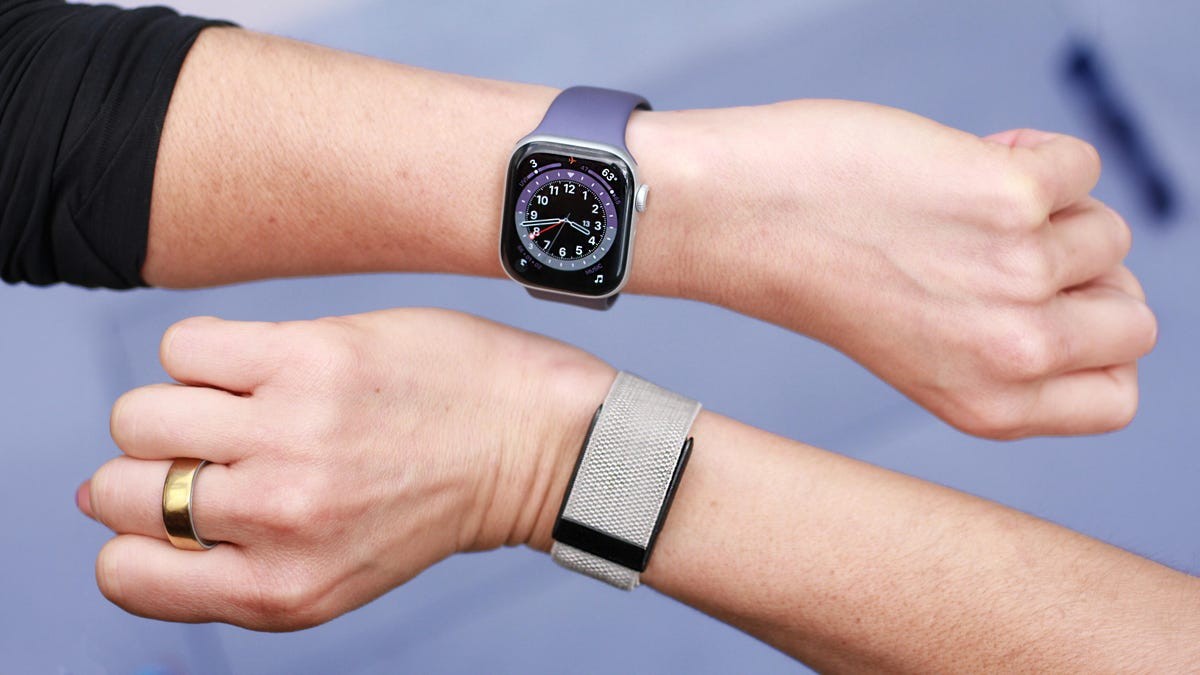
The following analysis compares the Apple Watch Series 11 —a versatile, all-in-one smartwatch—against the Whoop Band, a screenless, subscription-based tracker designed for deep physiological analysis.
The Core Philosophy: Utility vs. Optimization
The fundamental difference between these two devices lies in their purpose. Comparing them is like comparing a minivan to a motorcycle: both get you from point A to point B, but the experience and intent are entirely different.
- The Apple Watch is a “lifestyle” device. Health tracking is one of many features on a menu that includes notifications, payments, music, and communication. It is designed to be an extension of your smartphone.
- The Whoop Band is a “performance” device. It lacks a screen entirely, stripping away all digital distractions to focus exclusively on one goal: analyzing your body’s recovery and strain.
Cost and Commitment
The financial models for these devices are starkly different, which may be the deciding factor for many users.
- Apple Watch: A high upfront cost (approx. $400) for a device you own outright.
- Whoop: A lower entry barrier for the hardware, but it operates on a mandatory subscription model ($199–$359 annually). Without the subscription, the device loses its core functionality.
Furthermore, compatibility is a major hurdle: the Apple Watch is locked to the iPhone ecosystem, whereas Whoop is platform-agnostic, working seamlessly with both iOS and Android.
User Experience: Screen vs. Silence
The presence or absence of a screen fundamentally changes how you interact with your data.
- The Apple Watch Experience: It provides real-time feedback. You can check your pace, heart rate, or weather at a glance. However, this comes with the “noise” of constant notifications that can disrupt focus.
- The Whoop Experience: It is a minimalist’s dream. Because there is no screen, there are no distractions. However, you cannot check the time or your stats without pulling out your phone. This makes it a “slow burn” device; it requires days of consistent wear to build a baseline before the data becomes truly useful.
Data Interpretation: Numbers vs. Actionable Coaching
Both devices track similar biomarkers—heart rate, sleep, VO2 max, and menstrual cycles—but they deliver that information through different lenses.
The Apple Approach: Raw Data
Apple provides the numbers and basic trends. It tells you what happened, but often leaves the interpretation to the user. While it offers “Cardio Fitness” scores and health trends, it requires you to be proactive in checking the Health app to make sense of your progress.
The Whoop Approach: The AI Health Coach
Whoop excels at turning abstract data into a directive. It uses a Recovery Score (how ready you are to train) and a Strain Meter (how hard you actually worked) to create a feedback loop.
The standout feature is its AI Health Coach. Unlike static reminders, the AI provides proactive, personalized advice. For example, it can warn you that hormonal shifts might make workouts feel harder or suggest lowering your intensity to prevent injury. This turns the wearable from a passive logger into an active training partner.
Accuracy and Specialized Features
In head-to-head testing, both devices show high levels of accuracy, but they excel in different areas:
- Accuracy: The Apple Watch has proven highly reliable for heart rate tracking, often outperforming even specialized sports watches. Whoop is similarly accurate but offers less flexibility for users who want to export their raw data for independent analysis.
- Safety: The Apple Watch is the clear winner for emergency preparedness. With features like Fall Detection, Crash Detection, and Emergency SOS, it functions as a life-saving tool. Whoop lacks these critical safety layers.
- Battery Life: This is Whoop’s greatest advantage. It can last up to two weeks and can be charged while still worn on the wrist. The Apple Watch requires frequent charging, often leading to “data gaps” when the battery dies during sleep or workouts.
Summary: Which Should You Buy?
The “better” device depends entirely on your relationship with data and your daily routine.
Choose the Apple Watch if you want a versatile companion that manages your digital life, provides real-time feedback during workouts, and offers essential safety features like fall detection.
Choose the Whoop Band if you are a dedicated athlete or a minimalist who wants deep, AI-driven insights into recovery and strain without the distraction of a screen, and if you don’t mind a recurring subscription model.