


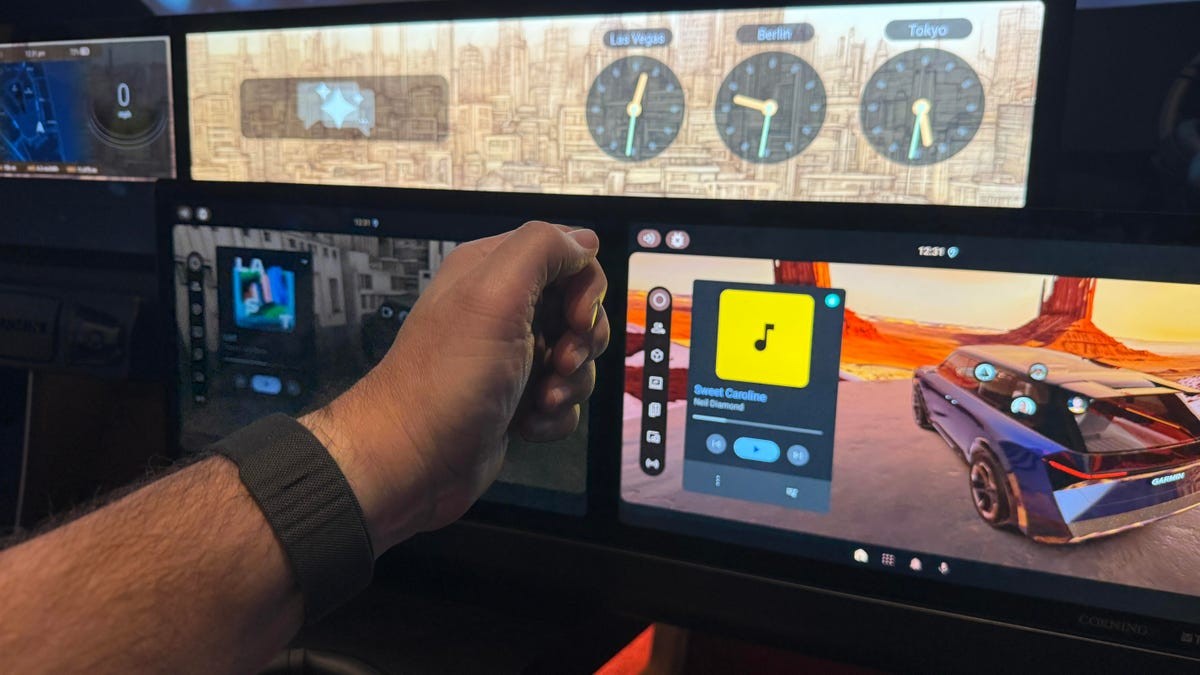
Meta is pushing the boundaries of wearable tech, demonstrating a functional connection between its neural EMG wristband and a car’s dashboard interface at CES 2024. The demonstration, developed in partnership with Garmin, allows users to control in-car functions using only hand gestures detected by the band’s electrical sensors – eliminating the need to touch the screen.
From Glasses to Wrist: A New Era of Control
Previously integrated into Meta’s Ray-Ban smart glasses, this is the first time the neural interface has been decoupled from headwear. The system interprets finger movements from electrical signals captured by the wristband’s electrodes, enabling actions like scrolling through menus, opening apps, and even playing games (Tetris was tested during the demo) without physical contact.
Why this matters: This isn’t just a novelty. It signals a shift toward more intuitive, hands-free control systems in vehicles, where drivers need to keep their attention on the road. The automotive industry has long experimented with immersive interfaces, and this neural band could be a step toward safer, more seamless integration.
How the System Works
The Garmin Unified Cabin demo setup, a multiscreen smart interior, showcased the band’s capabilities. The technology isn’t limited to precise positioning; it functions even with hands at rest, meaning gestures can be performed discreetly. The system supports dual bands, enabling both driver and passenger to interact with the dashboard simultaneously.
Key takeaways from the demo:
- Controls felt somewhat inconsistent, but the potential is clear.
- The band recognizes gestures like fist-and-thumb swipes for scrolling, and finger pinches for app activation.
- Integration with steering wheel use remains untested, but theoretically possible.
Beyond Cars: The Future of Wearable Control
Meta’s CTO, Andrew Bosworth, previously hinted at broader device control via the neural band, and the car integration confirms this ambition. While the current implementation is a proof of concept, Garmin plans to offer the Unified Cabin platform to other car manufacturers.
The bigger picture: The long-term goal isn’t just about cars. The ability to connect wearables to various devices – from appliances to entertainment systems – could reshape how we interact with technology. The author notes reliance on vent clips for a 2012 Honda CR-V, highlighting the current disconnect between technology and everyday vehicles.
“We already connect our phones to everything, but I expect that we’ll be doing the same with watches and bands soon.”
The synergy between Garmin’s wearables and Meta’s neural tech suggests a potential future where these devices become ubiquitous controllers for the connected world. For now, the technology feels like an early step, but the direction is clear: more immersive, hands-free interaction is coming.
This is a significant development in wearable technology, demonstrating how neural interfaces could become a mainstream feature in vehicles and beyond.