




Search engines aren’t just tools. They’re mirrors. What you type into that bar says a lot about what’s keeping you up at night. Or what you’re excited about. Google decided to look in the mirror for 2018. The result? A messy, extreme year reflected in data.
If you want to know how people reacted to major global events in 2018, you just look at the top queries. The moon wasn’t just celestial. It was a search term. The lunar eclipse drew eyes. So did the wedding of Prince Harry and Meghan. High-profile romance always trends. But it wasn’t all fairy tales. The World Cup took up bandwidth too.
Then the mood shifted. Hard.
The Turkish lira collapsed. People panicked. They searched for answers. Closer to home, the Hambach Forest protests dominated feeds. Climate action wasn’t just a slogan. It was a keyword.
Why the heatwave defined 2018 searches
Weather doesn’t usually top yearly lists. Unless it’s broken.
2018 was brutal. From May through September, rain stayed away. Germany baked. Temperatures hit tropical highs. For tourists? A dream. For farmers? A nightmare.
Crops failed. Yields dropped. The contrast was stark. Sun-seekers posted photos while agricultural communities faced losses. This split reality drove specific search behavior. Users looked for weather updates. They searched for crop damage reports. They wanted to understand why the summer felt so wrong.
The data shows a public grappling with extremes. Not just political or economic ones. Physical ones. When the environment shifts, search patterns follow.
So what does that tell us? We search for confirmation. For explanation. For connection. Even when the sun is shining, we’re looking for shade.
The wait for government and the rise of climate protests
Germany started 2018 in a holding pattern.
It took 171 days after the September 2017 federal election to finally form a new government. That’s a record. Most people were tired of the limbo by the time the coalition deal landed in the spring.
But the government formation wasn’t the only thing driving search traffic. Google’s year-end data shows two specific political hotspots dominated the news cycle.
One was Chemnitz.
The city made headlines for far-right riots. It wasn’t just local news. It became a national flashpoint, pushing the city name into the top five most-searched headlines of the year.
The other major term was Hambacher Forst.
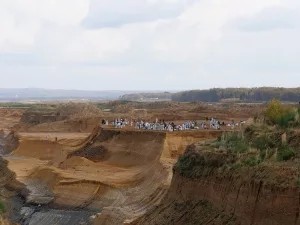
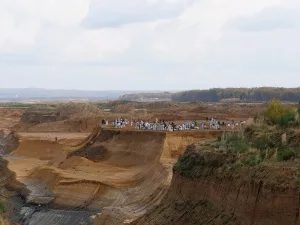
This wasn’t about violence. It was about trees. Thousands of environmental protesters occupied this forest plot for weeks. They were blocking the expansion of lignite mining. The message was clear: stop coal, save the forest.
The Hambacher Forst protests turned a local environmental issue into a national symbol for the climate movement.
These two events—Chemnitz and Hambacher Forst—bookended the political mood. One represented social fracture. The other represented a growing demand for ecological action.
Search interest didn’t stop there. State elections in Hesse and Bavaria also cracked the top ten.
People weren’t just reading about the federal government. They were tracking local power shifts too.
Why does this matter?
Because search trends reflect what keeps people up at night. In 2018, it was either the fear of right-wing extremism or the urgency of the climate crisis.
Or both.

Why the World Cup and Winter Olympics dominated German search traffic
The summer belonged to the World Cup. The winter belonged to the Olympics. Germany had a rough go of it on both fronts, and Google search data proves it.
For the first time in 84 years, the national team got knocked out in the group stage. A sad premiere. You can trace that collective disappointment right through to the search bar.
The World Cup sat at number one for general searches in Germany. It also topped the sports category. People weren’t just watching. They were checking scores, stats, and probably venting their frustration in the comment sections.
Then there is the word Medaillenspiegel. The medal table. It cracked the top five overall. Why? Because the Winter Olympics happened in South Korea earlier in the year.
People track medals. They check rankings. They want to know who won gold, silver, or nothing at all. It’s a simple habit. Search for the table. See where your country stands. Feel a little better, or worse.
The data doesn’t lie. The biggest sporting events drive the biggest searches. Even when the results sting.

What drove German search traffic in 2018
The sky took center stage that summer.
July 27, 2018. Germans wanted to know one thing above all else: when to look up.
The search term Mondfinsternis (lunar eclipse) topped the headlines category. It wasn’t just a quick shadow pass. This was the longest total lunar eclipse of the century. For 103 minutes, the moon turned that deep, bloody red.
But it wasn’t alone. Mars sat right there. Almost as bright as Venus. A smaller red dot next to the giant one. Two celestial events happening at once. People looked up. Then they typed it in.
Space drama faded fast. Money drama hit hard.
Why the Turkish Lira crash made headlines
Right after the moon, the lira fell.
The term “Euro Lira” landed at number two. Not because people were booking holidays to Antalya. Because the currency was bleeding value.
Summer 2018 was brutal for the Turkish economy. Domestic politics clashed with foreign pressure. The result? A currency in freefall.
It started with a downgrade. A US rating agency slashed Turkey’s creditworthiness in May. Then Donald Trump stepped in. He threatened tariffs on Turkish goods. The markets panicked.
President Erdogan’s policies didn’t help calm things down. They added noise to the signal. Investors got nervous. The lira dropped. And millions of Germans checked the exchange rate to see the damage.
Money moves faster than moons.
The royal wedding everyone watched
Third place went to romance. Or at least, the televised version of it.
Prince Harry and Meghan Markle. May 2018.
The wedding of the year. Millions watched globally. Germans included. It wasn’t just a local curiosity. It was a global event. The search interest stayed high across multiple categories. Not just headlines.
People wanted to see the dress. The vows. The moment.
A moon eclipse. A currency crash. A royal wedding.
2018 gave us all three in quick succession. The internet reacted accordingly. First we looked up. Then we checked our wallets. Then we watched a couple say “I do.”
Which one mattered more? Probably the lira. But the moon was prettier.

The heavy toll of 2018’s notable deaths
Grief travels fast online. When someone dies, the first thing many do is type their name into a search bar. In 2018, the search results told a story of massive losses. Stephen Hawking topped the list for many. The physicist changed how we understand the universe. Black holes. The Big Bang. His work was foundational. His death triggered a global surge in queries. People wanted to remember him. To understand his final years.
But it wasn’t just scientists.
Musicians left deep marks too. Aretha Franklin passed away. The Queen of Soul. Her name climbed the charts instantly. Then there was Jens Büchner. In Germany, he hit number one in the “farewells” category. It’s surprising for some. He was a Schlager singer. But in his home country, his impact was real. Fans searched for him in droves.
Why Stan Lee searches spiked globally
Then there was Stan Lee. He died on November 12, 2018. The reaction was immediate. And international. Unlike local stars, Lee’s reach was everywhere. He created the characters that defined modern pop culture. Spider-Man. Iron Man. The Hulk. The Fantastic Four.
Superheroes aren’t just movies. They are shared language.
People searched for him because they wanted to connect the man to the myths. The X-Men films? Those characters were his too. The search volume reflected that. It wasn’t just news. It was a cultural reckoning. Which heroes did he create? Who was the man behind the mask? The internet answered those questions with millions of clicks.
The haunting mystery of Daniel Küblböck
Not all stories end with celebration. Some end with confusion. Pain.
Daniel Küblböck’s case was different. He didn’t just die. He vanished. Weeks before the year ended, he disappeared from a cruise ship. The prevailing theory? Suicide. The searches were frantic. Worried. Angry. People didn’t just want facts. They wanted answers. Where was he? Why did it happen?
The gap between fame and tragedy is thin. Küblböck was a pop star. Loved by many. His disappearance shook his fans. The search queries showed that shock. It wasn’t a polite remembrance. It was a cry for understanding.
2018 took too many. The search history is a graveyard of sorts. Each query a tiny act of mourning. We look up the dead to feel close to them. To keep them here. In the cloud. If only for a moment.
The Cave Rescue That Broke the Algorithm
Google’s search data doesn’t just track what we need. It tracks what we feel.
In a list dominated by tech specs, political shifts, and product launches, one event stood out. Not for its commercial value. For its humanity.
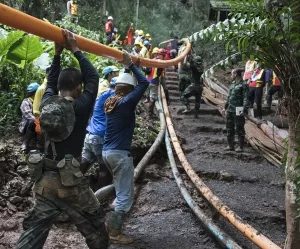
The rescue of the Thai cave soccer team made it into the top ten most searched queries.
It wasn’t a planned PR campaign. No press releases. No influencer drops. Just a group of kids and their coach trapped underground in a partially flooded cave in Thailand.
For days, the world watched.
Live streams. News updates. Breathless commentary. People refreshed their browsers not for clicks, but for hope. The boys had to wait. Under the earth. In the dark.
But they survived.
Every single one of them.
The event proves that attention isn’t just driven by utility. It’s driven by shared tension.
Why did this matter to search behavior?
Because when something is uncertain, people look for answers. Constantly.
They wanted to know:
– Where exactly was the cave?
– How were the divers navigating the floods?
– Which teams were involved?
– When would they come out?
These aren’t casual questions. They’re urgent. They demand real-time updates.
And Google delivered.
The search volume spiked globally. Not just in Thailand. Not just in Europe or Asia. Everywhere. It was a rare moment where geography didn’t filter interest. The story was universal.
This wasn’t just news. It was a global holding pattern.
We check search engines for facts. But sometimes, we check them for reassurance.
The cave rescue reminds us that behind every query is a person. Waiting for an update. Hoping for a good ending.
In a digital landscape often criticized for being cold or transactional, this was different. It was raw. It was collective.
And it proved that no matter how advanced our algorithms get, human empathy still drives what we type into the box.