




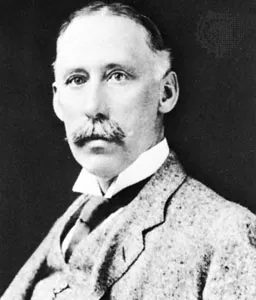
Frank Munsey didn’t care about journalism. He cared about money.
Born in 1854 in Mercer, Maine, he viewed newspapers and magazines not as public services but as moneymaking enterprises. He managed them with ruthless detail, kept editorial policies deliberately colorless to avoid offending anyone, and bought up competing papers just to shut them down. It was a strategy of consolidation. If he owned two papers in the same city, he’d kill the weaker one. Why keep it running when it just splits your own audience?
How Munsey’s Magazine Changed Publishing
He started small. After running a telegraph office in Augusta, Maine, he moved to New York City in 1882. He immediately launched the Golden Argosy, a magazine for kids. Six years later, he realized adults had more disposable income. He renamed it the Argosy Magazine and pivoted the content.
Then came the big move. In 1889, he founded Munsey’s Magazine. Originally called Munsey’s Weekly until 1891, it was the first cheap, general-circulation, illustrated magazine in the United States. The price tag? Ten cents.
That was revolutionary. Before Munsey, magazines were often expensive, literary, or niche. He made them accessible. He made them visual. He proved you could sell millions of copies if you kept the price down and the pictures up.
The Newspaper Consolidation Machine
Munsey didn’t stop at magazines. He turned his sights on newspapers, acquiring them like trading cards. His portfolio grew aggressively:
- The Star (New York City, 1891)
- The Baltimore News (1908)
- The Press (New York City, 1912)
- The Sun and Evening Sun (1916)
- The Herald and Evening Telegram (1920)
- The Globe (1924)
He didn’t just buy them to hold them. Between 1916 and 1924, he merged several of these papers. Some disappeared entirely. The goal was efficiency. Less redundancy, more profit. He stripped away the fluff and kept the cash flow.
Legacy and Wealth
When Munsey died in New York City on December 22, 1925, he left behind an estimated fortune of $20,000,000. Most of it went to the Metropolitan Museum of Art.
“Viewing his publications purely as moneymaking enterprises, Munsey administered them in detail.”
He wasn’t a visionary in the traditional sense. He didn’t believe in free press ideals or bold editorial stances. He built a media empire by treating content as a commodity. He showed publishers that consolidation works. He showed them that cheap pricing drives volume.
His approach feels familiar today. Digital platforms buying up competitors. Algorithms favoring neutral content to maximize engagement. Munsey was doing it a century earlier, with ink and paper instead of pixels.
The model stuck. The cheap illustrated magazine became the standard. The newspaper chain became the norm. Munsey got rich by simplifying