


Most kids dream of that first solo drive. You hit sixteen (or fifteen, depending on where you live), you pass the written test, you pass the road test, and suddenly you own the open highway. Or at least, you own the neighborhood streets. It’s a rite of passage. The DMV stamps your paper, your parents hand you the keys, and for the first time, your social life isn’t dictated by whose car is available or what time the bus runs.
But there is a dark side to this independence. Motor vehicle crashes are the leading cause of death for U.S. teenagers. We’re talking about more than one-third of all deaths for 16-to-19-year-olds. It’s a staggering statistic. Every time a parent drops their child off at the airport for college or sends them to a friend’s house across town, there is a silent, gnawing anxiety in the back of their mind.
States have responded with Graduated Driver Licensing (GDL) laws. These systems are designed to phase in driving privileges. You get a learner’s permit first. You sit with an adult in the passenger seat. You rack up hours. Then, maybe a year later, you take the road test again. If you pass, you get a restricted license. If you play by the rules, you eventually get full privileges.
It’s supposed to work. But rules don’t monitor you. Rules don’t see you texting behind the wheel or taking a corner at 55 mph in a school zone.
Enter the tech.
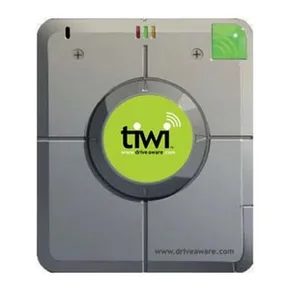
Inthinc has released a device called Tiwi. It’s a GPS-based telematics monitor. The company calls it a “breakthrough.” They aren’t alone in this space. There are other GPS trackers on the market. But Tiwi claims to do something different. Specifically, it focuses on speed.
Tiwi and the Speed Limit
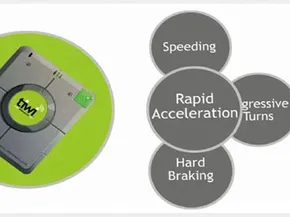
Most older telematics devices track acceleration, braking, and cornering. They tell you if you slammed on the brakes or took a turn too fast. Tiwi takes a different approach. It compares your actual speed against the posted speed limit for that specific location.
If you drive 10 mph over the limit, the device flags it. If you drive 20 over, it flags it harder. The data is sent to a dashboard where parents can see exactly where their teen was and how fast they were going relative to the law.
This isn’t just about catching bad behavior. It’s about education. When a teen sees that they were speeding in a specific neighborhood, they can’t say they didn’t know the limit. They can’t blame the road. The data is concrete.
Parents get peace of mind. Teens get feedback. The hope is that this transparency reduces risk. It turns driving from a black box into a transparent system.
The question is whether it works. Does knowing you are being watched change behavior? Early data suggests yes. But the technology is still evolving. And for now, it’s one more layer of surveillance in a teen’s life.

Most new drivers lack the reflexes to spot hazards before they happen. For parents watching from the sidelines, installing a GPS tracker is a common stopgap. You get location data. You see how fast the car is moving. You get texts when limits are breached. It’s a digital leash.
But most of these devices are dumb. They tell you the speed. They don’t know what the legal speed is. That’s the gap Tiwi fills.
Beyond Simple Tracking
Standard monitors let you set a hard cap. If you set 60 mph, you get an alert if the teen hits 61. Simple. But that’s not always realistic. Teenagers drive on highways where the limit is 65. They drive on city streets where it’s 35. A static limit is either too loose or too strict depending on the road.
Tiwi changes the game by integrating with real-time speed limit data. The system knows where the car is. It knows the posted limit for that specific stretch of asphalt.
This isn’t just about catching bad behavior. It’s about correction before escalation.
The Voice Coach
Here is the key difference. When a standard GPS sees you speeding, it sends a notification to your phone. You have to decide if you want to call them. You have to decide if it’s worth the argument.
Tiwi acts as an intermediary.
Before the parent gets a single ping, the device speaks to the driver. A recorded voice cuts through the music or chatter. It says, “You’re exceeding the speed limit; please slow down.”
It’s immediate. It’s impersonal. It’s less likely to trigger a defensive reaction than a phone call from an anxious parent. By the time you get the alert, the teen has already been reminded.
The Tiwi alerts parents, but before it does, the computer system itself will talk to the teen.
Hardware and Pricing
The box itself is unobtrusive. Small. Gray. Square. It sits on the dash, not hidden in the glovebox or under a seat. Visibility matters for deterrence.
Costs add up, though.
- Upfront cost: Around $549 for the hardware.
- Subscription: $24.95 or $34.95 per month.
The tier depends on communication preferences. Do you just want alerts? Or do you want more detailed reports? The base features are robust, but the price point puts it firmly in the “serious investment” category.
Why This Matters
Speeding is the leading cause of fatal crashes among teens. But it’s often not malicious. It’s ignorance. New drivers don’t feel the speed the way experienced ones do. They underestimate how fast they’re going.
A GPS that knows the speed limit provides context. It’s not just saying “you’re fast.” It’s saying “you’re over the limit.”
Does it guarantee safe driving? No. Teens will ignore voices. They will turn devices off if they can. But it adds a layer of accountability that static trackers lack. It turns a passive monitoring tool into an active coaching system.
The question isn’t really about the tech. It’s about whether parents are willing to pay for a co-pilot who never sleeps. For many, the $5

Parents get full control through a web dashboard. It’s not just a passive monitor. You decide how the alerts arrive. Phone calls. Text messages. Email. The choice is yours.
If you don’t want to distract your teen while they’re behind the wheel, the built-in cell phone offers a hands-free alternative. You can talk directly through the Tiwi device. No fumbling with a mobile phone. No eyes off the road.
Geofencing for School and Neighborhoods
Speed isn’t the only metric. Location matters too. The Tiwi uses geofencing to track specific zones.
Think of it as a virtual fence. You draw boundaries around the neighborhood or the high school. If your teen drives outside that perimeter, you get a notification.
This feature targets truancy. A student trying to skip class might hesitate. They know the Tiwi will ping their parents the second the car heads in the wrong direction. It adds a layer of accountability that GPS alone doesn’t provide.
Accelerometers and Crash Data
GPS tracks where the car goes. An internal accelerometer tracks how it moves.
These electronic sensors use pendulum mechanics to measure acceleration and direction changes. Hard braking? The pendulum swings forward. Aggressive turning? The movement shifts laterally.
If the swing is too drastic, the system flags the behavior. It’s a direct measure of driving aggression.
Beyond daily habits, the Tiwi serves an emergency purpose. In the event of an accident, the system can trigger an alert. It’s about immediate response when seconds count.
From NASCAR to Family Cars
This isn’t just a consumer gadget. It has a racing pedigree.
The Tiwi system originated in NASCAR. The sport demands speed. After Dale Earnhardt’s fatal crash in 2001, the industry needed better safety data.
Inthinc, operating under the name Independent Witness, developed “black boxes” for race cars. These devices recorded crash data. They also logged lap times and counts.
The technology proved effective in high-stakes environments. Now, that same data collection powers the Tiwi for everyday drivers. It’s safety tech filtered down from the racetrack to the family sedan.
For deeper dives into car technology, look into how dashboard displays work or whether GPS devices actually increase accident risks. The intersection of safety and software continues to evolve.