



King Ashoka transformed India. The Mauryan emperor ruled from roughly 265 to 238 BCE. He was the most powerful ruler of his dynasty. He also became a central figure in the spread of Buddhism. His legacy isn’t just in battles won. It is carved into cliff faces, pillars, and caves across the subcontinent. These are the rock edicts. They stand as public announcements and narrative histories. They record a massive shift in how power was exercised in ancient India.
The Blood of Kalinga
Ashoka’s early reign was defined by violence. He sought to expand his empire. The conquest of Kalinga stands out as particularly brutal. He slaughtered thousands of people during this campaign. The sheer scale of the death toll shook him.
This event triggered a moral crisis. Ashoka encountered the teachings of dharma. These were Buddhist principles centered on nonviolence and compassion. The contrast between his actions and these ideals was stark. He felt deep remorse for the bloodshed. The empire’s expansion had a heavy human cost.
Conversion and Correction
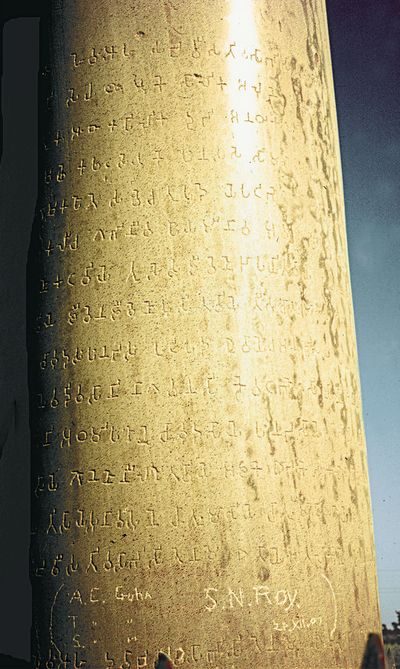
Remorse led to conversion. Ashoka embraced Buddhism. He didn’t just adopt the faith privately. He used his imperial power to promote it. The rock edicts serve as a record of his new understanding of moral law. He wanted to guide his people. He hoped stone could offer inspiration.
The edicts are scattered throughout his extensive kingdom. They appear on rocks and in caves. They are placed in high-visibility locations. This wasn’t subtle propaganda. It was a direct message to subjects. The king was speaking to them through stone.
Why These Edicts Matter Today
Modern historians rely on these artifacts. They are primary sources for ancient Indian political history. They reveal how the Buddha’s teachings influenced the state. Ashoka’s conversion shows how religion can shape governance. The edicts trace the path from royal decree to public morality.
They explain the influence of Buddhist ethics on the masses. Through Ashoka, these ideas reached a vast population. The rock inscriptions provide concrete evidence of this cultural shift. They bridge the gap between religious philosophy and state policy.
Understanding the Medium
Why stone? Clay tablets erode. Papyrus burns. Stone endures. Ashoka chose permanence. He wanted his message of dharma to outlast him. The choice of medium reflects the gravity of the message. It signals that moral law is as solid as the earth itself.
The edicts vary in length and detail. Some list administrative reforms. Others focus on ethical conduct. They all point back to Kalinga. The trauma of that war remains the anchor of Ashoka’s later rule. It serves as a warning against future aggression.
The Legacy of Nonviolence
Ashoka’s shift changed the trajectory of Indian history. It demonstrated that power could be tempered by ethics. The rock edicts are proof of this experiment in governance. They show a ruler trying to align his actions with spiritual truth.
For modern readers, these texts offer insight into early statecraft. They highlight the role of propaganda in ancient societies. But they also reveal genuine human regret. Ashoka’s remorse feels real after two millennia. It humanizes a figure often seen only as a divine king.
The stone remains. The empire fell. The ideas