


In the 1950s, American television was a purely local affair. Four major networks dominated the airwaves, but their reach was physically limited. Television signals are sent as direct lines from broadcast antennas to your television. If you live in a flat valley, you were good. If you were hidden in remote mountains or deep behind a ridge? You have static. Or not at all. Nevertheless, television quickly became the central nervous system of American culture. People in those blind corners didn’t see the shows everyone else was talking about.
The solution was rough, but effective. In 1948, residents of remote Pennsylvania valleys built antennas on hills and ran cables directly into their living rooms. It was a temporary hack to an ongoing problem. The same basic architecture—gathering a strong signal over long distances and relaying it to homes—would eventually evolve into the massive infrastructure we rely on today. By the early 1990s, this technology had become so widespread that nearly half of US households were connected to cable television.
Today, the definition of “cable system” has changed dramatically. We don’t just get TV anymore. Modern US cable networks provide hundreds of channels to approximately 60 million households. More importantly, they are the backbone of high-speed Internet access for millions of people. Some systems even take over telephone services and bring new programming techniques right to your screen. It’s a complex network of hardware and software that brings everything from educational content to specialty channels right to your coffee table.
Amplifier bottleneck
The earliest versions of this network were basically huge ground-based satellite dishes with very long copper cables connecting the central antenna to subscriber equipment. But copper is not a magic wire. As the electrical signal passed through the cable, it lost its power. The attenuation happened quickly. To keep the picture from turning into gray noise, cable operators had to place amplifiers on the line at regular intervals to strengthen the signal.
This created significant technical problems that plagued the industry for decades. Bill Wall, technical director of subscriber networks at major equipment manufacturer Scientific-Atlanta, emphasized the seriousness of the problem.
“In a cable system, the signal might have gone through 30 or 40 amplifiers before it got to your home, about one every 1,000 feet,” Wall explained.
Each amplifier added its own flavor of imperfection. Noise crept in. The edges of the image were blurred due to distortion. And if even one amplifier in that chain were to fail, the entire line would shut down from everyone downstream. Cable television gained a reputation for being unreliable and visually inferior to broadcast television. It was a fragile system held together by enough amplifiers for a small town.
The industry knew this was not sustainable. The quality ceiling was low and maintenance costs were high. The end of the 1970s was a turning point. Engineers eventually developed better technology to solve the amplifier problem and stabilize the signal path. More importantly, during the same period, new methods were developed to fit more programs into the existing bandwidth. In the end, the foundation was laid for the next explosion of content.
More channels
Once the signal path was established, the focus shifted from pure reliability to capacity. Old analog systems were limited by the physical width of the frequency spectrum available for transmission. But as gain improved and modulation techniques improved, cable operators were able to pack more channels into the same physical cable. This wasn’t just about adding a few local channels; it was about creating variety. Viewers who once had three options to choose from suddenly had dozens. This transformation from utility to entertainment center changed the way people consume media and laid the foundation for the on-demand culture we live in today.
The VHF/UHF switch you forgot existed
In the early 1950s, cable television operators were desperate. They wanted to use microwaves to receive signals from distant towers. Why? It brings television to people who live far away and cannot watch regular terrestrial broadcasts. It also solves the difficult problem in the Northeast of offering customers multiple versions of the same network station. For the first time, cables no longer just “own” the signal. It means “choose”.
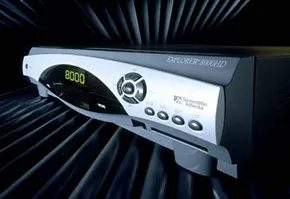
This change forces appliance manufacturers to rethink living room box. They added a physical switch to the new TV. You must manually switch between the two different tuning plans.
One of the programs is consistent with Federal Communications Commission (FCC) frequency allocation allocations. The other corresponds to the messy and variable layouts used in cable systems. These are not minor tweaks. Both plans map the radio spectrum in different ways.
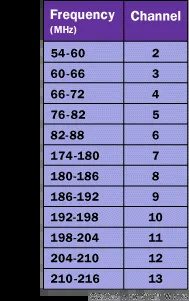
In both systems, one television station gets 6 megahertz (MHz) of bandwidth. The FCC originally reserved 12 channels for the Very High Frequency (VHF) band. These frequencies are not grouped. They were split into two different groups to avoid interference with existing wireless services.
Then, when everyone wanted TV, the FCC needed more space. They opened up the Ultra High Frequency (UHF) spectrum. Channels 14-69 are compressed in the 470 MHz – 812 MHz range.
Cable operators don’t have to worry about wireless interference. They can use “mid-range” frequencies, the gap between VHF and UHF that broadcasters ignore. This allowed channels 14-22 to be included in the mix. Channels 1-6 are placed at the bottom. The rest sat higher.
The CATV/antenna switch on the TV tuner acts as a gatekeeper. This tells the receiver whether to skip the midband gap or adjust directly via the midband gap. Ignoring this switch can lead to static, dead spots, and frustration.
Why is there a ghosting on my screen?
This is the technical reason why cable systems cannot simply rebroadcast the exact same VHF frequencies over the wire used by the delivery stations.
Cable systems are designed to shield the signal. They assume that the coaxial cable blocks external noise. The TV is designed to receive cable input or antenna only. But it can be leaks in. The connector is faulty. The shield was broken.
Things get weird if the external interference is on the same channel frequency as the cable signal. The problem? Speed.
Radio waves travel through the air at almost the speed of light. Signals sent via coaxial cable travel at about two-thirds of the speed.
The result is a timing mismatch. The direct broadcast signal and the cable signal arrive at the TV tuner a fraction of a second apart. The picture looks double. This artifact is called “ghosting “.
Cable operators get around this by changing frequencies. This is a solution to a physics problem that still plagues some traditional setups.
Satellites Changed the Game
In 1972, the cable television system in Wilkes-Barre, Pennsylvania did something radical. They launched the first “pay-per-view” channel. You pay to see a movie or a boxing match. They call it Home Box Office or HBO.
It remained in this area for several years. And by 1975, the architecture of American television was snapped into place.
HBO begins delivery to geosynchronous orbit satellites. The satellite then transmits the signal back to cable systems in Florida and Mississippi. This is no longer a local gimmick. This is national distribution.
These early satellites could handle up to 24 channels, said Bill Wall of the Scientific-Atlanta. The infrastructure required to catch this signal is enormous. Cable operators use 10 meter wide dishes. *A separate dish is required for each channel.
It was expensive. It was clunky. But it worked. The blueprint for modern cable delivery has finally been created.
Bandwidth Wars
As the number of programming options exploded, the bottleneck shifted to bandwidth. Early cable systems operated at 200 MHz. This allows for 33 channels. Not enough to meet demand.
Technology pushed the boundaries. Bandwidth expanded to 300 MHz. Then 400 and then 500.
Finally, the system frequency hit 550 MHz. The number of channels jumps to 91.
Two major technological shifts sealed the deal. Optical fiber has replaced copper wire in long-distance transmission. Analog-to-digital conversion cleans the signal. The quality improved. The number of available channels kept climbing.
We took this for granted for decades. Until the Internet made the concept of “channel lineup” obsolete. The hardware evolved. No need to switch between VHF/UHF. The ghosting faded. But the infrastructure built in that frantic push for bandwidth still underpins the way we consume media today.
The Shift to Fiber and Digital
The infrastructure powering our TV sets changed course in 1976. Cable operators started using fiber-optic cable for trunk lines, replacing the old coaxial wires that ran from the head-end to the neighborhood. The head-end is the central hub where signals are received, assigned to channels, and pushed out to the grid. By the late 1970s, fiber optics had matured enough to be a cost-effective solution for long-distance signal carrying.
The main advantage? Less signal loss. Coaxial cables degrade over distance, requiring constant amplifiers to boost the signal. Early fiber systems slashed the number of amplifiers needed between the head-end and the home from 40 down to about six. Systems built after 1988 went even further, often needing just one or two amplifiers for most customers. Fewer amplifiers meant fewer points of failure and a much cleaner signal.
This shift also unlocked customization. One fiber line could serve hundreds of households, allowing providers to target specific neighborhoods with messages or services. In the 1990s, this grouping proved perfect for local-area networks and Internet access via cable modems.
Digital Compression and Capacity
In 1989, General Instruments showed that analog signals could be converted to digital and fit into a standard 6-MHz TV channel. Using MPEG compression, modern CATV systems can squeeze up to 10 video channels into the bandwidth of a single analog channel. With an overall system bandwidth of 550 MHz, this opens the door to nearly 1,000 channels of video. Digital tech also adds error correction, keeping the picture sharp.
This move to digital revolutionized how cable companies handle paid content.
Encryption vs. Scrambling
The first scrambling system, demoed in 1971, worked by removing a synchronization signal during transmission. The customer’s box had to put it back in. Later methods injected a signal at a slightly offset frequency to distort the picture, which the TV would then filter out. The result was usually a jagged, jumbled mess.
Digital systems don’t scramble. They encrypt. The signal is encoded so that without the correct key, the digital-to-analog converter can’t make sense of the bit stream for the TV tuner. If you try to watch without a key, the system just shows a blue screen or an ad. It’s cleaner, harder to hack, and fundamentally different from the old analog noise.