



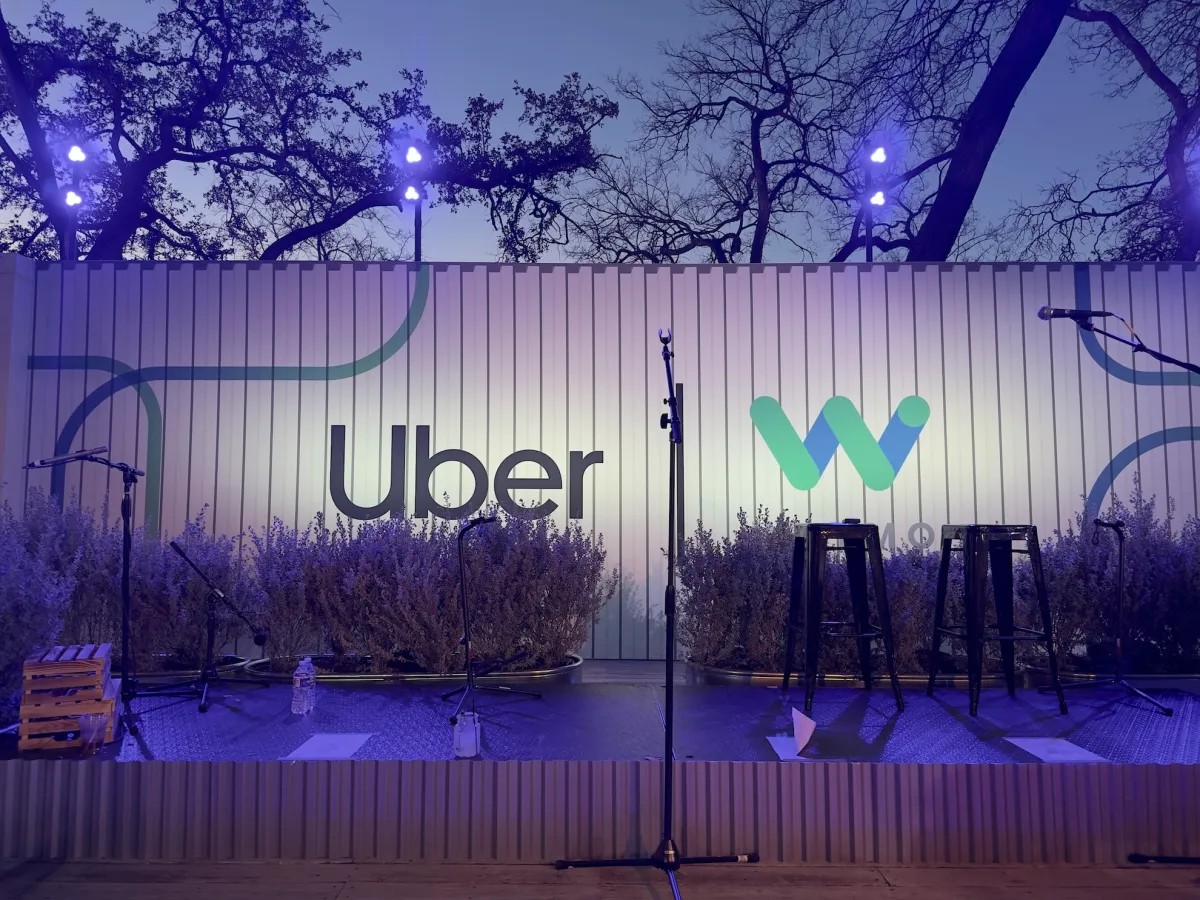
They’re partners.
Or they were.
Now Uber is trying to write the law of the road in D.C., and Waymo is hitting the brakes hard. It’s a messy collision of two very different visions for how cities move. One company wants a mix. The other wants solo flight.
The proposed bill in Washington would allow fully driverless cars to hit the streets without a safety operator. Waymo loves it. Uber hates it.
Here is why.
The Hybrid Bet
Uber argues the bill gives Waymo a free pass. A monopoly.
“A flawed, first-party only regulatory approach disrupts a city.” — Javi Correoso
That’s the pitch. Correoso leads U.S. policy for Uber. He’s been at town halls saying robotaxis cause congestion by idling empty. They can’t help elderly people with their groceries. They kill jobs. The data, he claims, says one AV replaces four humans.
So what’s the fix?
Uber wants a hybrid model.
You open the app. You tap “request.” The algorithm decides. You might get a human in a Prius. You might get a beige pod with no one behind the wheel. The consumer gets a choice.
Wait, not exactly a choice.
Correoso went further in May. He said regulation should require access to human-driven cars. Force it into the system.
Waymo calls this nonsense.
They back the bill. They say it allows safe deployment. It funds public transit. It helps workers through education grants. And crucially? It doesn’t handcuff them to a middleman who might be their competitor next month.
The stakes? Massive.
Uber is the biggest ride network in America. Waymo drives half a million rides a week across eleven cities. If Uber wins the regulatory game in D.C., AV companies face a ultimatum. Get on the Uber app or hire human drivers to run alongside your millions-of-dollars-in-demos.
If Waymo wins? Uber argues it gets shut out of the high-margin AV race entirely.
The Cost of Doing Business
Let’s look at the numbers.
Councilmember Charles Allen introduced the bill in May. It updates the 2012 Autonomous Vehicle Act. Currently, you can test driveless cars in D.C. But there must be a human behind the wheel, ready to grab the wheel if things go sideways.
This bill removes the human.
The District Department of Transportation gets new power. They issue permits to companies that pass the hurdles.
What are those hurdles?
- $5 million minimum in liability insurance.
- Crash reports filed in eight hours (for commercial fleets) or seventy-two hours (private vehicles).
- A $0.15 tax per mile traveled.
- A $1 million application fee.
- A non-refundable $5 million permit fee.
The last one stings.
Robotaxi advocates call the mile tax too steep. Industry insiders whisper the five-million-dollar gate fee keeps all but the deepest pockets out of town. Only giants play.
The revenue from the taxes splits. Half goes to public transit. The rest supports training for taxi drivers losing their gigs to steel and silicon.
Is that fair? Maybe. Is it cheap for a startup? No.
The hearing on Monday will be loud. Tesla reps are there. Lyft. The Teamsters. SEIU. Disability advocates. Safety groups. Even a shadowy organization called the Coalition for Accountability and Road Safety is canvassing against it. Nobody knows who pays them. They’re registered to a lobbyist for a firm hired by labor unions and the NY Black Car fund.
Chaos, but organized chaos.
Learning to Love Regulations?
Uber has a history.
Remember AB5 in California? Uber hated it. They wanted gig workers as contractors. They spent millions on Proposition 22. They won. The court upheld it. Workers got some benefits. Contractors stayed contractors.
But the world changed.
Unions are back. Labor is talking. Uber realized you can’t just bulldoze your way through policy anymore. Andrew Macdonald, Uber’s COO, wrote a LinkedIn post in May admitting this. The “grow-at-all-cost” era caused a corporate crisis. Trust evaporated.
“Today, we partner with cities, not confront them.”
Sound nice?
Uber is now building “AV Labs.” They are hiring engineers. They are partnering with over thirty autonomous companies globally. They are positioning themselves as the neutral highway for self-driving data.
But Greg Rogers at The Innovation Majority sees it differently.
He calls Uber’s move “regulatory capture.”
“Forcing business models doesn’t improve consumer welfare,” Rogers says. “It risks charging rent to anyone trying to operate AVs.”
Uber wants to be the toll booth.
Frenemies in the Rearview
This isn’t the first time these two have fought.
Back in 2017? Waymo sued Uber.
The charge was trade secret theft. A former Google engineer named Anthony Levandowski downloaded files. The phrase “laser is the sauce” became courtroom lore. Five days of trial. Uber settled. Peace returned.
Sort of.
In 2023, Waymo put its cars on Uber’s app in Phoenix. A pilot. Quietly ended in May of this year. Then in March 2024, executives clinked margarita glasses in Austin at SXSW. Waymo launched on Uber there. Then Atlanta.
But look at the app in Austin. You can’t hail a Waymo directly. You have to go through Uber. You wait. You hope for a match.
Then came the heat.
Praveen Neppalli, Uber’s CTO, posted on X about a “scary” Waymo car. Unsafe. Unsettling.
Dara Khosrowshahi took it further during earnings. He praised regulators asking hard questions about how AVs handle blackouts. School zones. Firefighters.
He didn’t name names. Everyone knew who he meant.
Now the friendship is cold.
Uber lobbied in New Jersey. It’s lobbying in D.C. It wants a hybrid future. Harry Hartfield, head of AV policy at Uber, said as much in testimony.
“Public policy should be designed for a hybrid reality, not an AV-only fantasy.”
Waymo sees a future without intermediaries. Without Uber.
Who wins?
Maybe it doesn’t matter who wins today. It matters which script gets copied next week in Austin, then Atlanta, then Chicago. The battle in D.C. is small in size but loud in signal.
The cars are coming. The humans are waiting. And Uber is sitting right in the middle, trying to control both.