




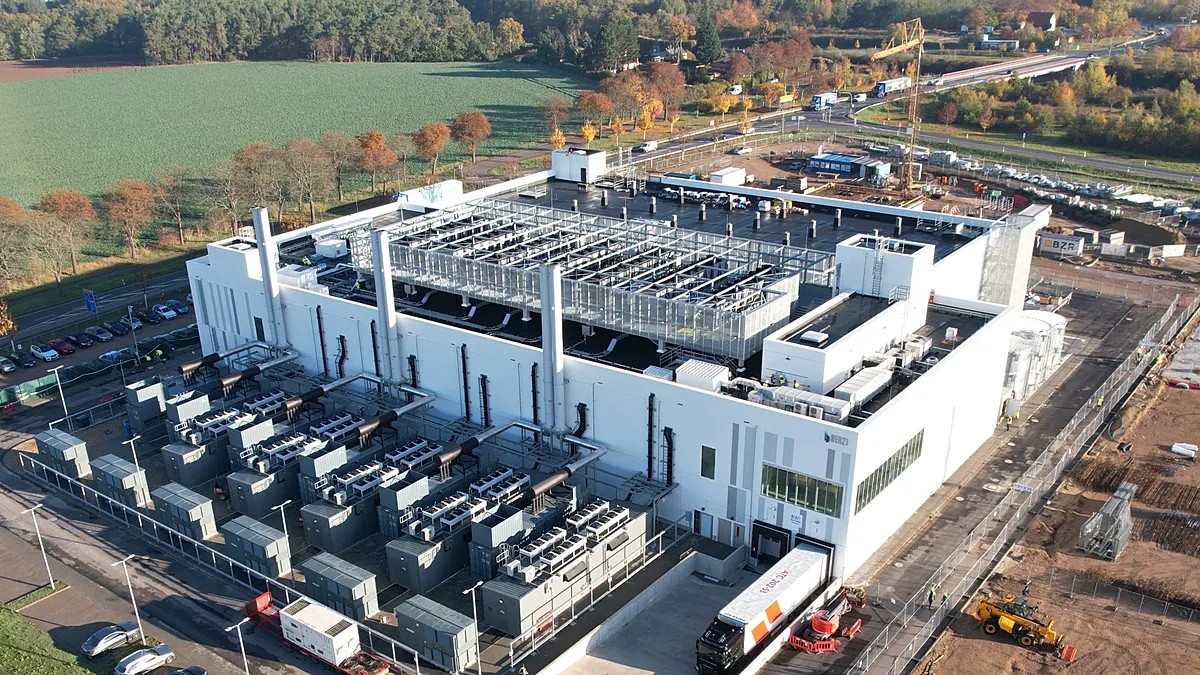
The artificial intelligence revolution is not just built on algorithms and code; it is built on physical infrastructure. Data centres—the massive facilities housing the servers, storage, and networking equipment required to process and distribute information—act as the “compute” backbone for everything from AI chatbots to cloud storage and video streaming.
As the demand for AI grows, so does the need for these facilities. However, the distribution of this critical infrastructure is highly uneven, creating a global landscape where a few nations hold significant technological leverage.
The US Dominance and the Global Hierarchy
According to the AI Index Report 2026 from the Stanford Institute for Human-Centered Artificial Intelligence, the United States maintains an overwhelming lead in the global data centre market.
As of 2025, the US hosts 5,427 data centres, a figure more than ten times greater than any other nation. This concentration of infrastructure suggests that the US is not just a leader in AI software, but also the primary landlord of the physical power required to run it.
The global rankings reveal an interesting trend regarding technological superpowers:
– Germany (529) and the United Kingdom (523) currently outpace China (449) in terms of total data centre count.
– Other significant players include Canada (337), France (322), and Australia (314).
– The top ten list is rounded out by the Netherlands (298), Russia (251), and Japan (222).
Europe’s Landscape: The FLAP-D Core
While the US leads globally, Europe maintains a substantial, albeit fragmented, presence. The total number of data centres in the EU stands at 2,269, which is roughly 42% of the US total. If the UK is included, Europe’s capacity reaches approximately 51% of the US level.
Within Europe, infrastructure is not spread evenly. The industry is heavily concentrated in the so-called FLAP-D markets :
– F rankfurt
– L ondon
– A msterdam
– P aris
– D ublin
These hubs attract the lion’s share of investment because they offer the “perfect storm” of requirements: high-speed internet exchange points, massive demand from the financial and tech sectors, excellent connectivity, and stable regulatory environments.
Outside of these major hubs, the rest of the continent shows varying levels of development:
– High Density: Italy (168), Spain (144), Poland (144), and Switzerland (121).
– Moderate Density: Sweden (95), Belgium (81), and Austria (68).
– Emerging/Lower Density: Ukraine (58), Ireland (55), and Denmark (50).
Beyond the Numbers: Why Location Matters
It is important to note that a high number of facilities does not always equal superior power. The Stanford report cautions that raw counts do not account for the size, computing capacity, or actual utilization of these centres. A single massive hyper-scale data centre can sometimes hold more processing power than dozens of smaller, older facilities.
The ability of a country to attract and maintain this infrastructure depends on four critical pillars, as identified by the World Bank:
1. Energy: Access to reliable and affordable power (essential for the massive cooling and processing needs of AI).
2. Connectivity: Resilient and high-speed broadband.
3. Geography: Access to suitable land and favorable physical locations.
4. Stability: A predictable political and business environment.
This creates a significant barrier to entry for low- and middle-income countries, which often struggle with inconsistent power grids or weaker broadband infrastructure, potentially widening the “AI divide” between wealthy and developing nations.
Conclusion
While the United States holds a massive lead in the physical infrastructure driving the AI boom, Europe remains a significant player through its highly concentrated FLAP-D hubs. Ultimately, the future of AI dominance will be determined not just by who has the best code, but by who controls the most reliable energy and connectivity.