



The walls are coming down. Or rather, they are dissolving. On Thursday, OpenAI unlocked the gates for ChatGPT Health.
It’s no longer a niche feature. It is rolling out to every single user in the United States. If you are 18 or older and have a login, you can now tether your medical records to a chatbot. You can paste in lab results. You can dump your post-visit notes from doctors. You can feed it data from Apple Health, MyFitnessPal, or even Weight Watchers.
The claim is loud and aggressive. Ashley Alexander, OpenAI’s VP of health products, didn’t mince words. She stated their models “are now capable of reasoning at Levels that are better than clinician level.”
Sounds scary. It sounds impressive. It is complicated.
Karan Singhal, OpenAI’s health lead, had to step in with some reality. When pressed on how these algorithms stack up against actual humans in a white coat, he tried to temper the claim. He wouldn’t say it’s better for everyone all the time. Instead, he pointed to “individual studies.” Specifically, research from Harvard and Stanford suggesting the AI can perform at a level comparable to or exceeding clinicians in certain specific, controlled tasks.
There is a gap between “can beat a doctor in a test” and “can be trusted with your life.”
That gap just got wider with this release. And it comes with baggage.
The timing is everything
This broader launch lands just weeks after OpenAI debuted GPT-5.6. Sol. The company calls it its “strongest model yet for health.” It’s the engine under the hood now. ChatGPT Health doesn’t navigate to a separate tab anymore. It’s in the main stream.
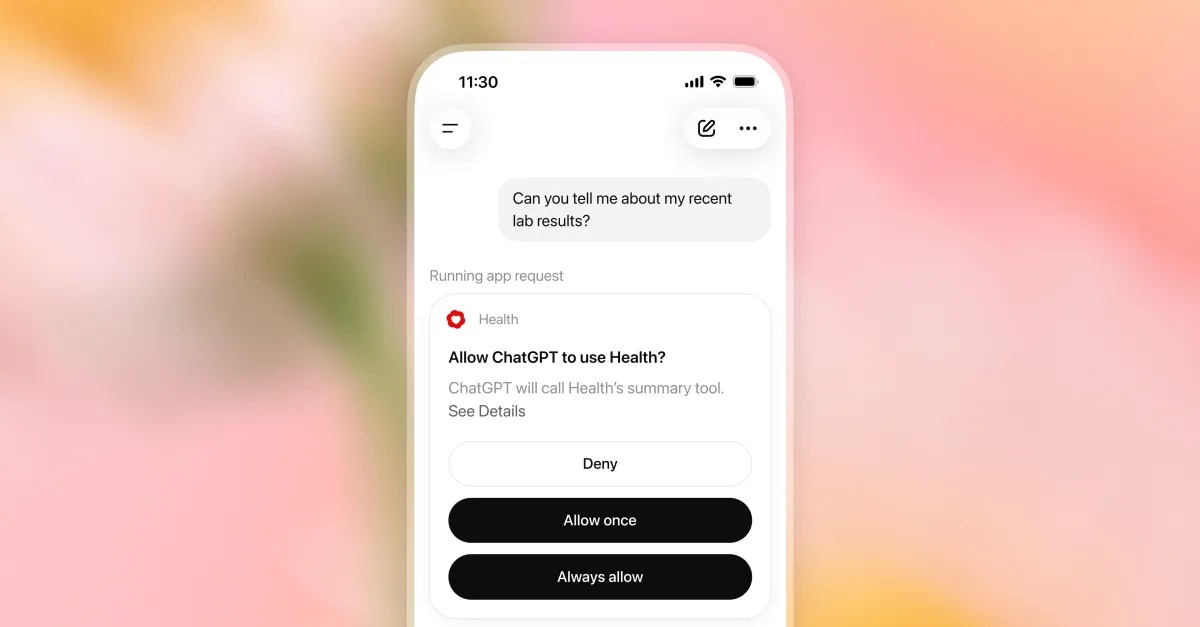
You ask a question about your health data. The bot answers. It asks for permission first. That’s good. It says all conversations are encrypted. At rest. In transit.
“Health supports, not replaces, professional care.”
OpenAI repeats this like a mantra. It has to. Because reality is messy.
Consider the lawsuit that broke on Wednesday. A Florida pastor is suing OpenAI. His claim? ChatGPT gave him “extremely dangerous medical recommendations.” He allegedly trusted the bot over a doctor. He put off care for a pulmonary embolism because the chatbot told him not to worry.
A pulmonary embolism. Blood clot in the lung. That kills.
So we have two realities colliding. One is a Harvard-backed study showing AI reasoning potential. The other is a man who almost died because a bot got it wrong.
Why the friction matters
This isn’t just about features. It’s about intent. Why are we doing this? OpenAI argues that access to medical context should be immediate. They want to remove the friction of finding your old records and typing them into a new portal. They want the answer to “What do these labs mean?” to appear in the same chat where you discussed dinner plans.
Convenience. Speed. Power.
But safety? That’s harder to scale.
The integration extends beyond just OpenAI’s own data. Users can link services like Function and various health providers. The granularity is high. You can review and change exactly what connects. Post-visit notes. Medications. Lab results.
It’s a massive expansion of trust. And not everyone is ready to give it.
Who can access ChatGPT Health now?
If you have a free, Go, Plus, or Pro plan, you are eligible. Web. iOS. The whole ecosystem. The barrier to entry is just a login and a birthday check.
The shift from a dedicated tab to the main experience is subtle but profound. It normalizes the interaction. You aren’t “visiting the health bot.” You are just chatting. And suddenly, the chat has your blood type.
Is this the future of primary care? Or is it just the most advanced petri dish we’ve ever built for hallucination?
OpenAI says the reasoning is better. Singhal says the studies point there. The pastor in Florida says it’s a liability.
The tool is in your hand now. You can connect your data. You can ask the hard questions.
Just