

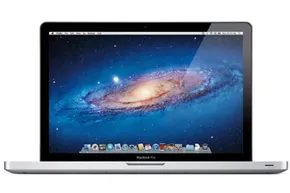
Buying a computer feels like navigating a minefield of specs you don’t fully understand. You need to decide on the processor architecture, storage capacity, RAM, and display resolution. It’s exhausting. You’re spending thousands on a machine that will mostly just handle email, scroll through social media feeds, and view photos of your family.
The first hurdle is the OS war: Mac versus PC.
The divide seems cultural as much as technical. Both camps have loyalists who will passionately argue the superiority of their preferred ecosystem. But there is a persistent belief that Macs carry a massive price penalty. Walk into a big-box store and you can walk out with a functional Windows machine for roughly $300. Try doing that with a Mac. The entry-level price tag sits at $1,000.
Is the Mac premium real?
The short answer is no. The gap closes rapidly when you compare apples to apples. If you build a PC with hardware, software, and features equivalent to a baseline Mac, the costs align almost perfectly. Tom’s Hardware tested this hypothesis by building a custom PC to match the specifications of a base-model Mac Pro. The result? A price difference of less than six dollars.
So why does the perception persist that Macs are luxury items for the elite?
The disparity comes down to entry-level options and market positioning, not intrinsic cost.
The Hardware
Mac minis and base-model iMacs target a specific segment. They aren’t trying to compete in the ultra-budget bin where you find chintzy, low-spec Windows laptops sold as “good enough.” Instead, Apple structures its hardware to deliver a consistent experience. When you look at the internal components of a comparable PC, you often find that achieving the same build quality, thermal management, and component longevity requires spending nearly the same amount of money. The $300 PC you see on the shelf? It’s likely built with plastic, weaker cooling, and lower-tier components that will degrade faster. The Mac’s higher starting price reflects that baseline of durability and uniformity, not an arbitrary markup.
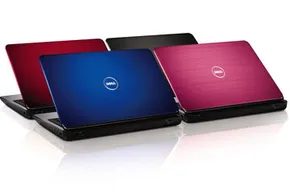

The Price Gap Isn’t Just About Hardware
Walk into a store selling PCs and you’re looking at an ocean of choice. Apple? You get a handful of models. Maybe five. That’s it. This limited lineup creates a stark price contrast. The entry-level Mac usually starts around $1,000. A comparable base-model PC laptop? You can grab one for under $500. Even a desktop might cost you just $300.
But comparing the $1,000 Mac to a $300 PC is like comparing a sedan to a go-kart. They aren’t the same machine. The Apple device offers higher build quality, better components, and a more polished experience. Apple doesn’t really do “economy.” It does “premium entry.”
Because there’s only one Apple and so few models, the price jump between their tiers feels steep. There’s no middle ground. With PCs, you can tweak everything. Swap a hard drive, upgrade the RAM, pick a specific graphics card. You build the computer to match your wallet. The PC market is crowded, competitive, and fierce. That competition drives costs down and selection up.
There’s also the hardware philosophy. PCs are built to be opened. You buy a base model and add to it later. Macs are sealed boxes. You can’t just slot in a new GPU or upgrade the motherboard easily. For the average user, this doesn’t matter much. For gamers and tinkerers, it’s a dealbreaker.
Stability Comes with a Cost
That lack of flexibility isn’t all bad. By controlling the hardware and software completely, Apple ensures a tight integration. The result is an operating system that tends to be more stable. Fewer crashes. Faster performance. Repairs are often simpler for technicians because they aren’t dealing with hundreds of different motherboard configurations. It’s a controlled environment.
Software: The Hidden Cost
When you buy a computer, software availability is rarely an issue. Most major programs run on both Mac and PC. But what comes on the computer matters.
Macs ship with a suite of high-quality, professional-grade tools. iMovie. GarageBand. Safari. iLife. They’re there by default. You can’t remove them. You can’t say, “I don’t want GarageBand, so give me a discount.” It’s non-negotiable. That included software is why the base price is higher. You’re paying for the ecosystem.
PCs let you choose. You can buy a bare-bones machine and install only what you need. This keeps the upfront cost low. But here’s the catch: adding that same high-quality software later costs money. If you want the multimedia tools that come free on a Mac, you’ll be buying them separately. And on a PC, you really should invest in serious antivirus protection. That’s another line item in the budget.
There’s also the Apple ecosystem advantage. If you own an iPhone or iPad, the Mac plays nice with it. Syncing is automatic. Seamless. For people already in the Apple walled garden, that convenience is worth the premium.
The Virus Myth vs. Reality
You’ve heard it a million times: Macs don’t get viruses. PCs do. It’s mostly true, but the reasons are simpler than people think.
It’s not magic. It’s math. There are roughly 100 malware programs targeting Macs. For Windows? About 20 million. Why the disparity? Virus creators are opportunistic. They want to infect as many computers as possible. Since Windows has a much larger global user base, it’s the more profitable target.
Macs are also more secure by design. Their architecture makes it harder for malware to take root. But don’t let the stats lull you into a false sense of security. Just because the attack surface is smaller doesn’t mean it’s closed. It just means attackers haven’t bothered to knock on the door yet.
The premium price tag on a Mac isn’t just about silicon. It’s about brand equity. Apple has successfully positioned its hardware as a status symbol. The sleek aluminum chassis isn’t just industrial design; it’s a signal. Artists, musicians, and creative professionals are seen flocking to the ecosystem, reinforcing the idea that if you want to make serious art, you need the right tools. This perception drives market share up, year after year, regardless of raw spec-sheet comparisons.
But aesthetics aren’t the whole story. Customer service plays a massive role in justifying the cost. Apple Stores are staffed with people who actually know what they’re talking about. Tech support is efficient. Consumer satisfaction ratings consistently beat out traditional PC makers. And that includes the entire buying experience, not just the hardware itself. For many buyers, that peace of mind is worth the extra cash.
Is a Mac Really Easier to Use?
There’s a pervasive myth that macOS is inherently simpler than Windows. It’s not. It’s just different. The user interface follows a different logic. Some people find it intuitive. Others find it restrictive. There’s no hard data proving one is objectively easier to use than the other. It comes down to muscle memory and preference.
Then there’s the advertising. Apple spends billions telling you that Mac users are young, creative, and trendsetting. PC advertisers, by contrast, talk about price and flexibility. Because Apple rarely focuses on low cost in its marketing, the average consumer assumes a Mac costs more than a comparable PC. And historically, that assumption has been right.
The Mac Persona: Who Actually Buys Them?
Choosing a computer is often an identity choice. According to various surveys, Mac users skew younger. They are more likely to identify as liberal. They tend to live in urban centers. One statistic claims they are 80 percent more likely to be vegetarians than PC users. Your choice in computer might say more about your dietary habits than your workflow. It’s a cultural signifier as much as a technical one.
Frequently Asked Questions
Are Apple computers worth buying?
Many users argue they are. The reasons usually cited are reliability, consistent software updates, and the fact that older macOS versions still receive bug fixes and security patches.
Where to Find More
If you’re still on the fence, there’s plenty of data to chew on. Look into the comparisons between hardware specs, long-term support, and ecosystem integration. The next steps in your research might change your mind entirely.