


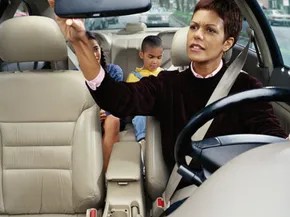
Parents have spent decades trying to keep children from losing their minds on long drives. The usual suspects are all here. You hand them a handheld game console to fight digital monsters instead of siblings. You blast the front seats with the auditory chaos of in-car DVDs. Or you rely on the nuclear option: the threat of pulling over and making them walk back. It never really works.
Sirius XM Radio thinks it has a better solution.
The company is pushing Sirius Backseat TV to create what they call “backseat bliss.” The concept is simple enough. It pipes kid-friendly channels like Nickelodeon, Cartoon Network, and The Disney Channel directly into the video monitors installed in the rear of equipped vehicles.
The real trick isn’t just the TV. It’s the audio isolation. Adults in the front can listen to their own stuff while kids watch and hear theirs. No shouting. No fighting over the aux cord. This works because Sirius fits these television channels within the digital bandwidth that carries the rest of its programming. It is a clever use of existing infrastructure. Consumer electronics companies are making entertainment increasingly mobile, and this is just the latest step.
What is Sirius Backseat TV?
To understand why this matters, look at the history of mobile video. To get programmed TV shows in a car before this technology, you needed a bulky satellite receiver bolted to the roof. It was ugly. It was heavy. It drained the battery. Alternatively, you tried to catch over-the-air signals with a portable television. The picture would jump. The sound would cut out. You’d arrive at your destination with a headache.
Sirius Backseat TV solves the signal problem by using satellite data rather than aerial waves. It bypasses the need for roof-mounted antennas that look like alien tech. Instead, it relies on the existing satellite subscription model.
This blurs the line between home and mobile video. Your living room TV experience follows you down the highway.
“It’s possible because Sirius fits the television channels within the digital bandwidth that carries the rest of its programming.”
The result is a quieter car. A happier kid. And a front seat that doesn’t sound like a daycare center gone wrong.
Does this actually change how we view travel? Probably. But for now, it just means fewer road rage incidents.
The pitch is simple. It hits a nerve every parent recognizes in the back of a minivan: the relentless chorus of “Are we there yet?” Sirius Backseat TV positions itself as a high-tech electronic nanny. Its job is to keep the little ones pacified, occupied, and quiet while you navigate traffic.
But what is it actually?
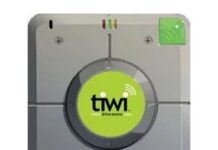
At its core, Backseat TV is a mobile entertainment bundle. You get Sirius tuning hardware and a monthly subscription for the programming. Right now, it’s not something you can just buy off the shelf at Best Buy and plug into your 2008 Honda Civic without some work. It’s installed exclusively as an option on new Chrysler, Dodge, and Jeep vehicles.
If you’re buying one of these specific models, the deal looks like this:
- Dodge Grand Caravan
- Dodge Charger
- Dodge Magnum
- Chrysler Town & Country
- Chrysler 300
- Jeep Commander
- Jeep Grand Cherokee
The price tag? $470. That covers the receiver and the first year of service.
The Aftermarket Alternative
What if you aren’t in the market for a new Chrysler product? You can still get in on the action. Think of it like upgrading your car stereo system. Sirius calls this version the Sirius Connect Audio/Video Tuner (SCV1).
You buy the unit separately to mount in your existing car. Expect to pay around $300 for the hardware. But the costs don’t stop there. You’ll need to pay a $6.99 monthly subscription fee for the video component. Crucially, you must also have the standard $12.95 monthly Sirius satellite radio subscription. You can’t get the TV without the radio subscription.
There’s another catch. The system doesn’t come with screens. You have to supply the backseat monitor (or monitors) yourself. It integrates with your existing car radio and DVD player, so if you’ve already got a solid audio/video setup, it slots in relatively cleanly.
Signal, Quality, and The Weather Problem
The hardware setup includes two small antennas mounted on your roof. They squeeze the TV channels into the same bandwidth spectrum that carries Sirius’ 130 radio channels.
Reviewers have generally given the video quality good marks. It’s not HD. Don’t expect broadcast-level clarity. But users report that it doesn’t suffer from the lag or pixilated imaging that plagued earlier mobile video attempts. It’s watchable.
However, it is satellite-dependent. That means obstructions are a problem. Tunnels. Tall buildings. Dense urban canyons. The signal drops when the satellite can’t see your antenna. Weather is also a factor. Rain fade is a real thing. The satellite industry is constantly trying to develop equipment to mitigate the weather’s impact, but if you’re in a heavy storm, expect static or a black screen.
Control and Content
The system comes with a child-friendly wired remote. It lets backseat viewers select channels. Front-seat passengers get their own wired remote to control Sirius radio programming. This separation is key. It prevents the kids from hijacking your music choices while you’re trying to drive.
So, what’s actually playing?
It’s television from major kids’ networks: Nickelodeon, The Disney Channel, and Cartoon Network.
- Nickelodeon & Disney: These offer round-the-clock airings of full-length shows. You’re looking at SpongeBob SquarePants, Dora the Explorer, Hannah Montana, and Cory in the House.
- Cartoon Network Mobile: This is different. It’s a sub-brand built specifically for the mobile format. Instead of 22-minute episodes, it runs short-form programming. Clips range from two to 11 minutes. Think Chowder, My Gym Partner’s a Monkey, and Foster’s Home for Imaginary Friends.
Short-form content is smarter for road trips. It’s easier to switch channels, easier to engage with in brief bursts.
The Distraction Debate
Parents and kids love this technology. It works. The kids stop complaining. The drive becomes bearable.
But is it a good idea?
We are living in an era where distracted driving is a public health crisis. Every day brings new statistics about eyes-off-the-road accidents. Putting a live television screen in a moving vehicle adds another layer of cognitive load. For the driver, it’s a visual distraction. For the passengers, it’s engagement that keeps them from looking out the window or talking to each other.
Before you form a hard opinion on whether the peace and quiet is worth the potential risk, we need to look at the practical realities of using it on the road.
There’s an undeniable pull in peering into the blue light spilling from a passing car’s rear window. You wonder what they’re watching. Is it a movie? A show? The voyeuristic itch is real. But what if that instinct becomes a road hazard?
Sirius XM saw this coming. They didn’t just build a gadget; they built a legal defense. That’s why they named it Backseat TV. It wasn’t accidental branding. It was a shield. Many states have strict laws against front-seat video viewing. Drivers need eyes on the road, not on a screen. So, lawmakers and electronics makers struck a deal. A compromise. The tech companies agreed to kill the video signal in the front seat if the parking brake isn’t engaged. Simple logic: the car must be in park. The brake must be set. Only then does the video work up front.
“The more devices you have in a vehicle, the more potential distractions you have,” says Ron Kipling, a human factors specialist at the Virginia Tech Transportation Institute.
Inventive drivers, however, hate boundaries. They’ve hacked the system. Workarounds abound. You can bypass the safety lock. But here’s the catch: police officers see it. They ticket you for it. If an officer sees a front monitor playing while you’re moving, you’re getting a citation. The back seat? Unrestricted. You can install as many screens there as you want.
The logic feels fuzzy though. Why is rear viewing acceptable but front viewing a crime? The research literature doesn’t give a clean answer. We know distracted driving is dangerous. But pinpointing exactly how many accidents involve consumer electronics? That’s hard. Public officials have zoomed in on cell phones and texting. Those are the big bad wolves of modern driving. But what about the little blue screens in the back?
Could a device that silences screaming kids actually help the driver focus? Maybe. If the back seat is quiet, the driver is calmer. Better concentration. But then again, smartphones are streaming video to drivers everywhere now. Live TV. Movies. We’re carrying theaters in our pockets. Maybe that surge in mobile entertainment will force more studies on small screens and safety.
Can you rig a monitor to play Sirius Backseat TV up front with minimal electronics skills? Yes. You can do it. But common sense should stop you. Don’t distract yourself. Don’t endanger others. The law is clear. The risk is real.
Now that we’ve parsed the safety debate, let’s look at the money. Why would a company invest in this? Does the business model hold water?
The first question a parent asks isn’t about bandwidth. It’s about the price tag. Does it really make sense to spend big money just to avoid speaking to the kids on a road trip? Is there a market for silence?
Sirius Backseat TV isn’t cheap. You’re looking at at least $300 upfront, plus a $20 monthly subscription. That’s a steep entry fee when talking to your teenager is free. The catch? The subscription fee also unlocks Sirius audio channels. You aren’t just paying for video. You are paying for a media ecosystem.
Compare this to mobile reception systems for DirecTV. Those have been around for years. But they are bulky. You need an SUV, an RV, or a van. They don’t fit in a sedan. And they cost $1,500 or more. Sirius is targeting a gap that DirecTV left open: regular cars, lower upfront cost, integrated audio.
The Business Logic Behind ARPU
Sirius is playing the long game. This is standard strategy for any forward-thinking subscription media service. They are using technology to find new customers. They want to expand revenue.
Cable companies. Phone providers. Satellite programmers. They all chase one metric: Average Revenue Per Unit (ARPU).
How do they calculate it? Total product revenue divided by the total number of subscribers. It measures popularity. It tracks growth.
There are two ways to boost ARPU. You can raise rates and annoy customers. Or you can add services and charge a little more. Sirius is choosing the second path. They are bundling value. They are justifying the $20 monthly fee by offering more than just static.
Will Americans Embrace Mobile TV?
The market is shifting. Streaming video to cell phones is gaining traction in the United States. Verizon’s V-Cast. Sprint’s Sprint TV. The infrastructure is improving.
But timing is tricky. The financial crisis that exploded in 2008 is still dampening consumer appetite. People are cutting non-essential expenses. Will they spend $300 plus $20 a month for a screen in the back seat? Probably not right now.
There hasn’t been an immediate rush to adopt services like Backseat TV. But analysts say that will change. The United States has historically lagged behind Japan and Europe in mobile communications. More evolved cell networks there allowed quality streaming video since the early 2000s.
“It’s just a matter of time” before the mobile video lifestyle becomes popular, telecom analyst Jeff Kagan told U.S. News & World Report. The infrastructure is catching up. The consumer habit is forming. It’s only a matter of adoption.
A Small Screen in a Big Market
For now, Sirius treats Backseat TV as an ancillary service. It’s not a primary contributor to their bottom line. It’s a test. It’s a way to keep subscribers engaged.
But it would be short-sighted to predict the “small screen” sector will remain small. As mobile video gains wider acceptance in the United States, the landscape will shift. The question isn’t if this technology will work. It’s who will pay for the privilege of being entertained while moving.
“It’s just a matter of time” before the mobile video lifestyle becomes popular.
Sirius is betting on that time coming soon. The hardware is ready. The subscription model is proven. The only variable left is the consumer’s willingness to pay for convenience.
To get the technical specs and current pricing, you’d need to check their official site. The pieces are there. The market just needs to click.