


Samsung has doubled down on its foldable phone ambitions with the release of the Galaxy Z TriFold, a device designed to push the boundaries of mobile productivity and entertainment. While the Z Fold 7 remains a strong option for those seeking a refined foldable experience, the TriFold introduces a new level of versatility – and complexity. This article breaks down the key differences between these two devices, explaining what each brings to the table and who they’re best suited for.
The Evolution of Folding: Why This Matters
Foldable phones aren’t just a gimmick; they represent a fundamental shift in how we interact with mobile technology. Samsung has been a leader in this space, and the Z TriFold is a direct response to growing demand for larger, more functional foldable devices. Analysts at IDC predict 30% growth in the foldable market, fueled by innovations like the TriFold and the potential arrival of an Apple competitor. This competition is driving rapid evolution, forcing manufacturers to refine designs and features.
Design & Build: Three Panels vs. Two
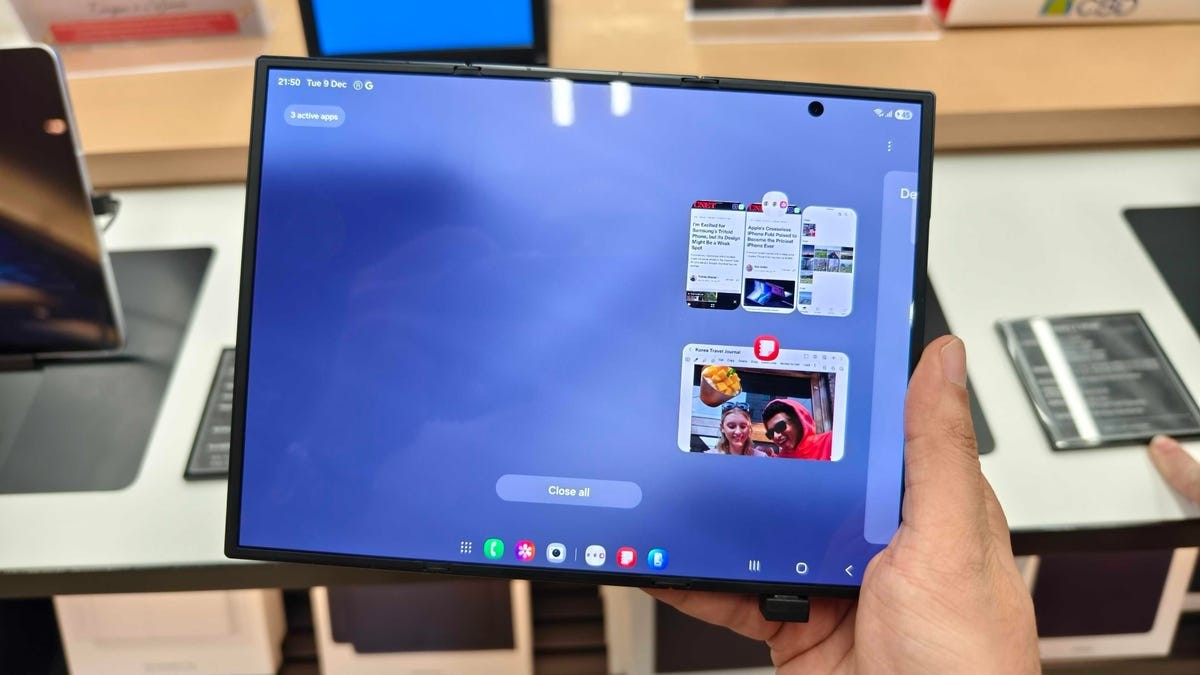
The most obvious distinction between the Z TriFold and Z Fold 7 lies in their form factor. The Z Fold 7 builds upon the established “book-style” foldable design – two panels connected by a hinge. The TriFold, however, expands this concept with three panels and two hinges, allowing it to unfold into a larger tablet-like experience.
- Z Fold 7: Retains the familiar foldable phone-to-tablet transition, with a thickness of 8.9mm when folded.
- Z TriFold: Measures 12.9mm thick when folded, noticeably bulkier due to the added panel and hinge mechanism. When unfolded, panel thicknesses range from 3.9mm to 4.2mm.
Samsung has spent years perfecting its hinge technology, ensuring smooth and reliable operation. The TriFold’s hinges include a spring-loaded opening mechanism and even onboard warnings to prevent incorrect folding. However, the added weight – the TriFold weighs 309 grams versus the Fold 7’s 215 grams – will be noticeable during extended use.
Display: Size and Clarity
Both devices feature a 6.5-inch AMOLED cover screen with a 21:9 aspect ratio and a 120Hz adaptive refresh rate. The difference emerges when unfolded:
- Z Fold 7: Boasts an 8-inch AMOLED display with a resolution of 2,184×1,968 pixels (368 ppi).
- Z TriFold: Unfolds to a 10-inch display, but with a lower resolution of 2,160×1,584 pixels (269 ppi).
While the larger screen on the TriFold offers more immersive viewing, its lower pixel density may result in slightly less sharpness compared to the Fold 7. Samsung has minimized creasing on both devices, but the TriFold has two creases versus the Fold 7’s single one.
Performance and Battery Life: Powering the Foldable Experience
Both phones are equipped with the Qualcomm Snapdragon 8 Elite Gen 5 chipset, ensuring smooth performance for everyday tasks and demanding applications. Samsung’s One UI 8 (built on Android 16) provides a familiar and customizable software experience, with seven years of OS and security updates guaranteed.
Battery life is a key consideration:
- Z Fold 7: Features a 4,400-mAh battery, providing all-day usage for many users.
- Z TriFold: Packs a larger 5,600-mAh cell, but the increased screen size may offset the capacity advantage. Testing is needed to determine real-world battery performance.
Both phones support 45W fast charging (TriFold) and 25W (Fold 7), along with Qi wireless charging and modern connectivity standards like Wi-Fi 7 and Bluetooth 5.4.
Camera Capabilities: Consistent Quality
Samsung has equipped both the Z TriFold and Z Fold 7 with the same camera setup:
- 200MP main sensor with OIS
- 12MP ultrawide lens
- 10MP telephoto lens with 3x optical zoom
- Dual 10MP front-facing cameras (cover and inner display)
Expect vibrant colors, good dynamic range, and reliable low-light performance from both devices. The aging telephoto camera on the Fold 7 may still exhibit some noise in challenging conditions.
Pricing and Availability: A Premium Investment
The Galaxy Z Fold 7 starts at $2,000. The Z TriFold, while not yet widely available in the US, currently sells for around $2,430 in South Korea. An eventual US release could carry a higher price tag due to import costs and market dynamics. The TriFold has already seen limited availability, selling out quickly on its initial launch day.
Conclusion: Choosing the Right Foldable
The Galaxy Z TriFold represents Samsung’s boldest step yet into the world of foldable devices. It’s a productivity powerhouse with an expansive screen, but at the cost of added bulk and a higher price. The Z Fold 7 remains a compelling choice for those who prioritize portability and refinement. Ultimately, the best foldable for you depends on how you intend to use it: the TriFold for immersive multitasking and entertainment, or the Fold 7 for a more balanced experience.