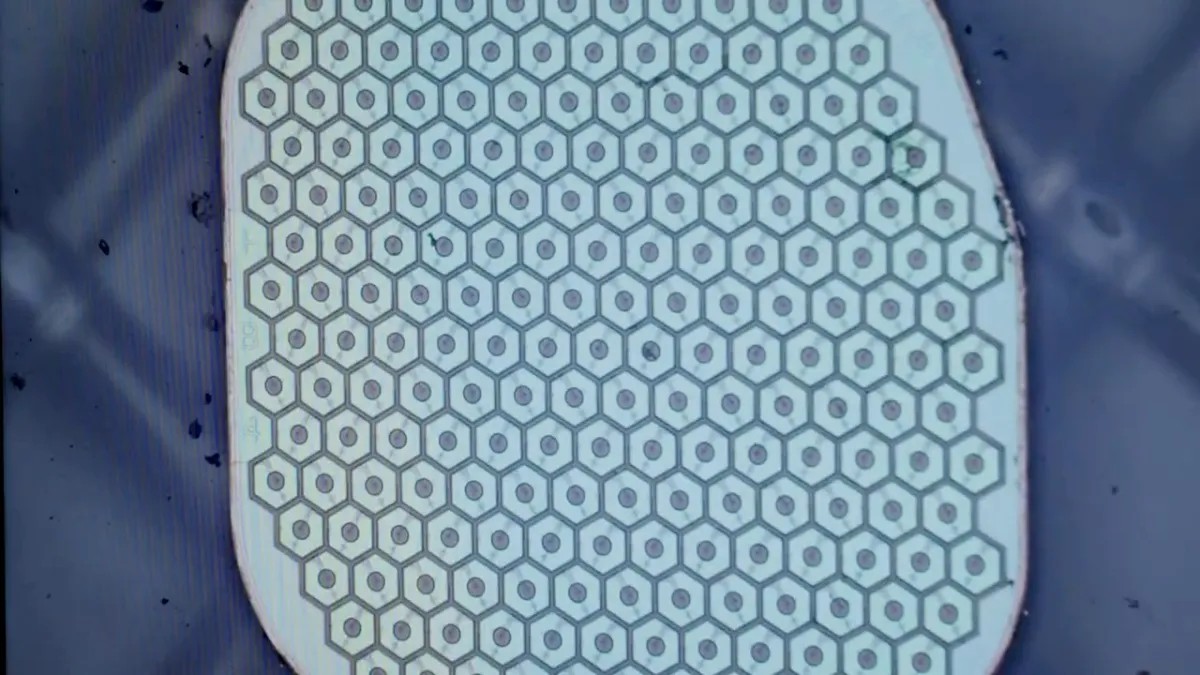
Science Corporation, a biotech startup led by former Neuralink president Max Hodak, is shifting the paradigm of brain-computer interfaces (BCIs). Moving away from traditional metal probes, the company is preparing to conduct its first human trials using a biohybrid approach —a method that seeks to bridge the gap between digital electronics and living biology.
A New Biological Frontier
The core innovation lies in the company’s “biohybrid” sensor. While industry leaders like Neuralink use rigid electrodes to penetrate brain tissue, Science Corp. aims to integrate lab-grown neurons directly into their hardware.
The vision, championed by Chief Science Officer Alan Mardinly and scientific adviser Dr. Murat Günel (Chair of Neurosurgery at Yale Medical School), is to create a device where:
– Electronics provide the processing power and data recording.
– Lab-grown neurons act as a biological bridge, integrating naturally with the patient’s own brain cells.
– Light pulses are used to stimulate these neurons, allowing for more organic communication with the brain.
This approach addresses a critical flaw in current BCI technology: tissue damage. Traditional metal electrodes often cause scarring and inflammation, which can degrade the device’s performance over time. By using biological components, Science Corp. hopes to create a more stable, long-lasting connection.
The Strategy for Human Trials
The company is taking a pragmatic, highly calculated path toward human testing. Rather than seeking immediate FDA approval for a new device class, they plan to target patients who already require major neurosurgery.
The Clinical Roadmap:
- Target Demographic: Patients undergoing craniotomies (such as stroke victims needing to reduce brain swelling) will be the primary candidates.
- The Procedure: Instead of piercing the brain, the sensor—which is roughly the size of a pea and contains 520 electrodes—will be placed on top of the cortex inside the skull.
- Initial Goal: The first phase will test a version of the sensor without embedded neurons to evaluate its safety and its ability to record brain activity effectively.
From Restoring Sight to Treating Parkinson’s
Science Corp. is not a newcomer to medical technology. The company recently acquired PRIMA, a device designed to restore vision in patients with macular degeneration, which is currently moving toward regulatory approval in Europe.
However, the long-term goal for Hodak and his team is much more ambitious: human enhancement and disease reversal.
“I imagine this biohybrid system as combining [electronics and biology],” says Dr. Günel. “In Parkinson’s… we cannot stop the progression of the disease… whereas if you can really put the [transplanted] cells back in the brain, protect those circuits, there’s a chance… that we can stop progression.”
The potential applications are vast:
– Neurological Monitoring: Providing early warnings for seizures in tumor patients.
– Regenerative Medicine: Using electrical stimulation to encourage the healing of damaged spinal cord or brain cells.
– Disease Management: Moving beyond simply masking symptoms (like tremors in Parkinson’s) to actually protecting and repairing neural circuits.
The Road Ahead
Despite the $1.5 billion valuation and successful testing in mice, the path to widespread clinical use remains long. The company must still refine the process of growing medical-grade neurons and navigate complex medical ethics boards. Dr. Günel suggests that even with an optimistic timeline, human trials may not begin until 2027.
Conclusion: By merging lab-grown biology with digital sensors, Science Corp. is attempting to move BCI technology from “detecting” brain signals to “integrating” with them, potentially turning neuroprosthetics from simple tools into regenerative therapies.