


Artificial Intelligence has long been a cornerstone of predictive modeling, assisting professionals in fields ranging from meteorology to finance. However, as the complexity of the data grows, traditional silicon-based computers are hitting a mathematical ceiling. A recent breakthrough by researchers at University College London (UCL) suggests that the solution may lie in a hybrid approach: marrying the processing power of AI with the unique capabilities of quantum computing.
The Hybrid Approach: Bridging Two Worlds
In a study published in Science Advances, researchers demonstrated a method where a classical supercomputer and a quantum computer work in tandem. Rather than attempting to run an entire process on a quantum device—which remains impractical due to current technological limitations—the team used a hybrid workflow :
- The AI Model: Housed on a traditional supercomputer, the AI handles the bulk of data processing and management.
- The Quantum Boost: When the AI encounters a calculation too complex for standard binary logic, it offloads that specific task to a quantum computer.
- Integration: Once the quantum device completes the specialized calculation, it hands the results back to the AI to finalize the prediction.
This method addresses one of the biggest hurdles in the field: quantum noise. Current quantum devices are “noisy” and error-prone, making them difficult to use for long, continuous tasks. By using them only for specific, high-intensity mathematical steps, researchers can extract value even from relatively small and unreliable quantum hardware.
Understanding the Quantum Edge
To understand why this matters, one must look at the fundamental difference between classical and quantum processing:
- Classical Computing: Uses bits (0 or 1) to perform calculations sequentially, step-by-step.
- Quantum Computing: Uses qubits, which leverage two key principles:
- Superposition: The ability to represent both 0 and 1 simultaneously.
- Entanglement: The ability to link qubits so that the state of one instantly influences another.
These properties allow quantum computers to explore vast mathematical possibilities all at once, rather than one by one. In the UCL study, this “quantum advantage” was used to predict the movement and interaction of gases and liquids—a task that is computationally exhausting for traditional machines.
Real-World Implications: From Climate to Cancer
The ability to model fluid dynamics and molecular interactions has massive implications for several critical industries:
- Climate Science: Improving the accuracy of long-term weather patterns and environmental shifts.
- Medicine & Drug Discovery: Modeling how molecules interact at a subatomic level. We are already seeing early signs of this; for instance, Google’s Quantum Echoes algorithm aims to map molecular structures, and researchers at the University of Toronto have used similar hybrid methods to target previously “undruggable” cancer cells.
- Urban Engineering: Optimizing complex systems like city-wide water or gas distribution.
The Road Ahead
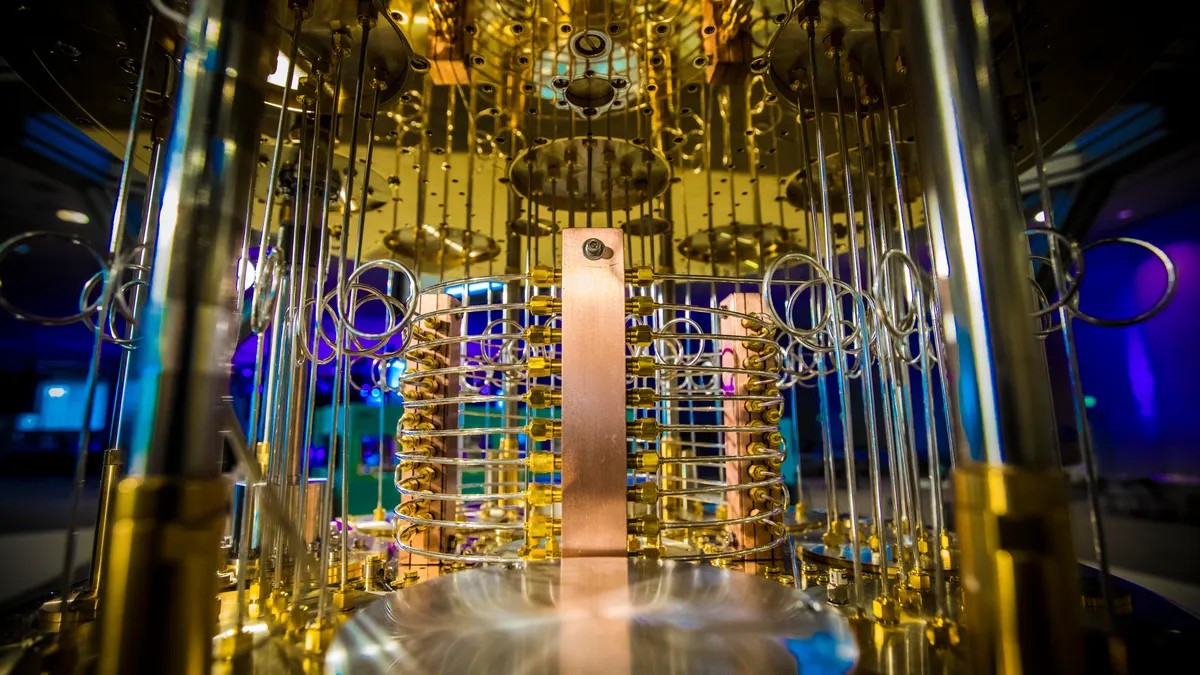
Despite the excitement, significant challenges remain. Quantum computers are incredibly delicate, requiring extreme temperatures to function, and they are highly sensitive to environmental disturbances. Furthermore, managing the massive datasets required for these models remains a logistical hurdle.
However, the UCL research proves that we do not need to wait for “perfect” quantum computers to begin seeing benefits. By integrating today’s “noisy” quantum devices into existing AI frameworks, we are entering an era where even imperfect technology can solve problems that were previously considered impossible.
Conclusion
By combining the stability of classical AI with the specialized mathematical power of quantum computing, researchers are unlocking the ability to model complex physical systems with unprecedented speed and accuracy. This hybrid model marks a practical step toward solving some of the world’s most difficult scientific challenges.