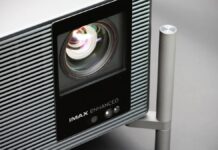



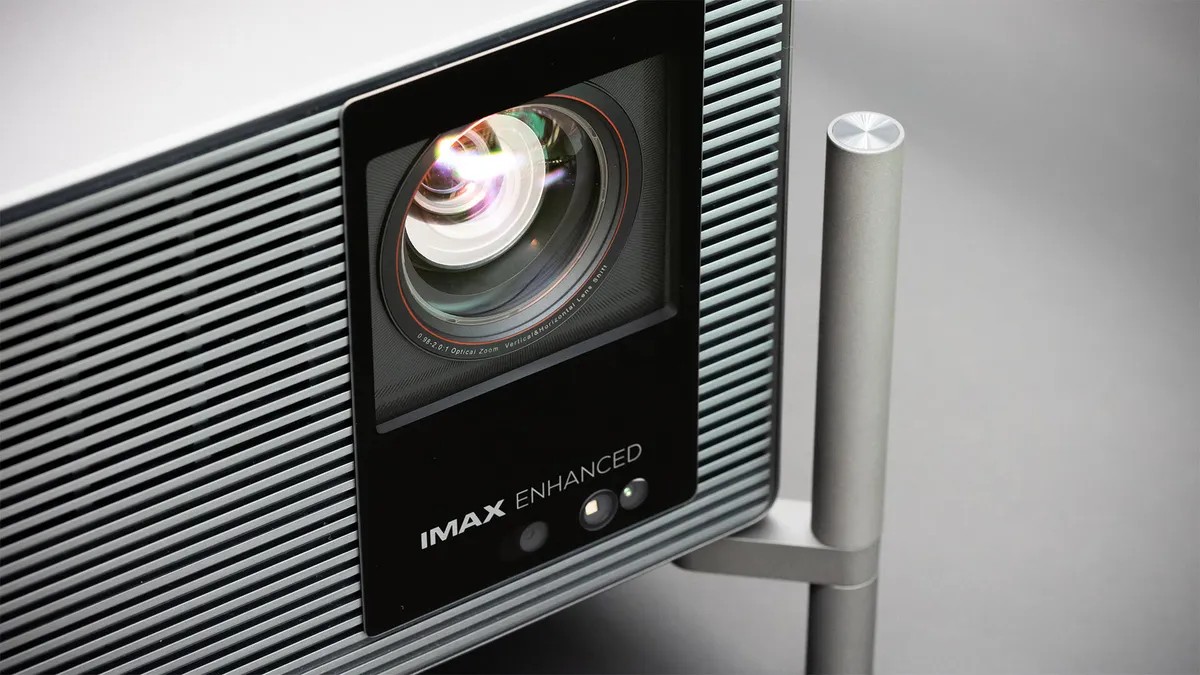
Remember CES 2026. I looked at the first Titan Noir then. Curious? Absolutely. The market was drowning in ultrashort throw and gimbal hybrids. This was an old-school box with big claims.
Jump to now. Meet the Pro. It boasts 6,000 lm of claimed brightness, optical zoom and a price tag that makes your eye twitch.
Is it any good.
Yes. If you ignore the marketing fluff you find a very capable projector. The contrast is deep. Colors are right. It’s built for dark home theaters but small enough for a living room if the geometry works. It’s not cheap. It is very cheap for what you get.
Specs that hurt the eyes
Here’s what matters:
- Resolution: 4K
- Claimed lumens: 6,000
- Zoom: 0.98 – 2.0:1
- Lens shift: ±130% V / ±50% H
- Light: RGB Laser
6,000 lm sounds like fiction. In my accuracy mode the meter read 3,286 lm. Still higher than most. Specifically 20% more than the Xgimi Horizon 20 Max.
Turn it to “Performance” mode with max laser.
I measured 5,754 lm.
Xgimi’s claim was exact. It’s triple the brightness of your average CNET tester sample. With a 100 inch screen the picture hits TV-bright levels. And this isn’t even the peak of their lineup. The Noir Max is coming soon. They say it’ll hit 7,000 lm.
The catch is noise. At full blast the fans scream. And the color shifts green. You can’t sit nearby. It’s painful.
Brightness means nothing without black.
Native contrast landed around 2,281:1. High for DLP. The Anker Nebula X1 Pro sat at 1,494:1. But compare this to Sony or JVC LCOS panels and you’re still behind. Those are pricey too but so is this. At $5k you’re entering high-end territory. Comparisons are fair.
Dynamic contrast helps. The iris closes and the laser dims on dark scenes. Technically infinite if you cut power but real-world dynamic ratio exceeds 6,400:1.
Lens memory is promised in a future update. Essential for aspect ratio switching. My screen is 2.35:1. I need one zoom for 16:9 content and another for the widescreen fills. Currently manual. Later maybe automatic.
Inputs and Outputs
Three HDMI ports. Two USB. Audio out via eARC optical and analog. Wi-Fi plus ethernet. No smart TV app.
A backlit remote with four programmable keys sits in the box. Smart touchpoint. Use one for input switching. Use another for picture presets.
Two 12W internal speakers. Surprisingly boomy but useless. If you drop $5k on a projector you already own a sound system. Using internal speakers here is an insult to the hardware.
The lack of a streaming OS is a feature not a bug. Less bloat. No data harvesting. Just HDMI in.
How does it look next to the rest.
I ran battles against two competitors.
The Epson LS1100100. Four years old. A legend. I measure about 1,40 lm from it in accurate mode. To make things fair I dimmed the Xgimi to match.
Side by side. Close.
Epson edged it on natural skin tones. The Xgimi won on deep reds. Look at Thor Ragnarok. The chair scene. On the Epson red is… red. On the Xgimi it’s blood-crimson. Vibrant. DLP just tends to feel sharper during motion anyway.
When you let the Xgimi run wild the contest ends immediately. The sheer light output draws your eye. The color gamut explodes.
Unless.
You wear glasses.
The Glass Problem
This is the dealbreaker for many.
RGB lasers cause speckle. That grainy texture over solid bright colors. It’s subtle. But it’s there. LCD panels look smoother.
But the bigger issue is chromatic aberration. If you have prescription glasses bright white objects against a dark background split. A red or blue ghost appears on either side of the light source. Credits roll at night. Streetlamps.
Look through the corner of your lens. The effect gets worse.
This is different from the DLP rainbow effect. This is optical interference with your corrective lenses. I see it. It bothers me. I wouldn’t buy this projector if I didn’t have to remove my specs first.
The Epson avoids this because it uses a single blue laser with a phosphor wheel. No split spectra. No ghosting.
The JMGO N3 Ultimate sits in between. Similar DLP tech. Cheaper. Good but the Titan feels richer in detail and color depth. Worth the $2k premium only if you need the sheer scale of brightness and dedicated setup.
Final thoughts
The Titan Noir Pro is a beast. The picture quality is stunning. Contrast and brightness define it. You’ll watch movies differently.
The price is high. You are approaching Sony/JVC prices. Those brands offer better contrast but fail on brightness. Xgimi flips the table. Bright wins here.
But check your glasses. Test for aberration. Don’t take my word.
If the image stays clean for your eyes this might be the last projector you ever need to buy.
“There are SUVs that do 0-60 in half the time now. But the classic car still turns heads.”