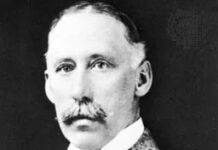



Lila Bell Acheson was not just a wife to a famous publisher. She was the operational engine behind one of the most successful magazine brands in history. Without her organizational skills and social connections, Reader’s Digest might have remained a paper idea.
She was born on Christmas Day in 1889 in Virden, Manitoba. Her father was a Presbyterian minister. The family moved through small Midwest towns before settling in Tacoma, Washington. That move changed everything.
In Tacoma, she met DeWitt Wallace. He was an aspiring publisher with a big idea. He wanted to create a digest magazine. It would collect general interest stories from other publications. The format was simple. The content was broad.
The timing was bad. The United States entered World War I. The project stalled.
Wallace joined the U.S. Army. He left the magazine idea behind. Acheson did not wait. She went to work.
She organized YWCA centers in the Eastern states. These centers supported women working in war industries. It was hard, practical work. It gave her experience in management. It also gave her a network.
After the war, she stayed in the East. She continued in social service work. She did not return to Tacoma.
They married in 1921.
The first issue of Reader’s Digest appeared in 1922. Circulation started small. It hit 1,500 copies in the first year. Growth was not immediate.
But it did not stop.
By 1929, circulation jumped to 200,000. The model worked.
The magazine became a global phenomenon. By the early 21st century, it existed in 50 editions. It was published in 21 languages. Worldwide circulation reached roughly 23 million readers.
Acheson and Wallace were also major philanthropists. They restored historical sites around the world. Their work earned them the Presidential Medal of Freedom in 1972.
They established the Lila Wallace–Reader’s Digest Fund. It supported educational and cultural programs. The foundation was reorganized in 2003 as the Wallace Foundation.
Acheson died on May 8, 1984, in Mount Kisco, New York. She was 94.
Her legacy is not just in the magazines. It is in the infrastructure she built. She turned a husband’s idea into a global business. She managed the people behind the stories.
The Wallaces proved that content and charity could coexist. But the real story is often overlooked. It is about the partner who makes the launch possible.
Without Acheson, the digest might have died in the trenches of WWI. Instead, it survived. It thrived.
The question remains. How many other ideas failed because the organizer was missing?
We rarely name the organizers. We name the faces. The authors. The founders.
But the foundation is built by others.