





You have two hundred friends on Facebook. Fifty connections on LinkedIn. Sixty followers on Twitter. That is a sizable digital footprint. It feels like you are popular. But does this virtual popularity matter outside the browser window?
Staying in touch online requires little effort. A few clicks. A few keystrokes. You are connected. Social networks allow us to share information in various ways. Personal photos. Status updates. Funny videos. Professional endorsements. Industry articles.
Before the Internet took over daily life, we relied on local networks to get things done. Need a job? Knowing someone on the inside helps. Looking for a date? Ask a friend’s cousin. Need a plumber? Ask your neighbors.
Online social networks take that local web and expand it globally. There is a term for this: glocalization. You can search for jobs in your area through online boards. You can flirt with someone across the world. You can find a plumber and read reviews from people who have used him before.
But how do these two worlds relate? Do online networks complement real-life ones? Is the impact positive or negative? Optimists argue that social networking strengthens existing ties and forges new ones. It leads to an improved social condition. Pessimists argue that online networks keep us isolated. They close us off from other worldviews.
Since the boom in online social networking is so recent, there are not many hard numbers to prove either side definitively. We can look at studies. We can see what experts say.
Understanding Social Capital
To understand how online and offline networks benefit us, we must first define social capital. Physical capital is easy. It is money. It is belongings. It is stuff. Social capital is different. It is the measure of your connections. It is the value of your network.
The main theory of social capital is simple. Social networks provide benefits. Trust. Cooperation. Information. The collective value of these networks is your social capital.
Consider this. When your neighbors are out of town, do you watch their house? That is social capital. Your network of neighbors looks out for each other. Have you ever joined an internet support group? That is social capital in action. Your church. Your book club. Your favorite bar. They all provide social capital. You share information. You support each other. You work together for positive action. Fundraising. Charity work.
Advocates of social capital believe that an abundance of it correlates with better community outcomes. Improved school performance. Lower crime rates. Better public health. Reduced political corruption.
Research shows that the social capital of communities has declined significantly in recent decades. Experts blame urban sprawl. People do not live in close proximity anymore. They blame television. Busier lives. A decline in overall trust.
Some blame the Internet for this decline. However, the Internet actually helps build social capital. Just in different ways. Studies show the Internet does not conflict with community connection. The Web helps people maintain active contact within their network. Geographic restrictions no longer limit face-to-face interactions.
You may have 200 Facebook friends. How many are you actually close to?
The Dunbar Number Limit
Anthropologist Robin Dunbar proposed an interesting theory about social networks a few years ago. He stated that our brains can only manage a limited number of social contacts. Studying apes, he arrived at the number 148. Rounded up to 150. This is the famous Dunbar Number.
The study did not include humans. Sociologists often cite it when discussing our social networks. The average number of “friends” in a Facebook network is 120. Very close to Dunbar’s magic number.
Professional Networking
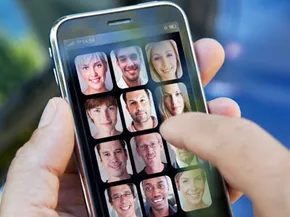
The landscape of human connection shifted permanently in 2006. The Pew Internet & American Life Project released a study titled “The Strength of Internet Ties.” It did more than just measure clicks. It dissected how people build social networks. The findings revealed two distinct categories of relationships.
Core ties. These are your inner circle. You talk to them constantly. You trust them with your deepest secrets. You call them when life breaks down.
Then there are significant ties. Also known as weak ties. These connections sit on the periphery. Contact is less frequent. Emotional intimacy is lower. But they matter. They bridge the gap between your core group and the rest of the world.
The explosion of online social networks has amplified weak ties. Platforms like Facebook and Twitter act as memory aids. They remind us of people we might otherwise forget. While the label “weak” suggests fragility, these connections often provide the most tangible benefits.
Why Weak Ties Solve Problems Better Than Core Ties
Strong ties are redundant. They think like you. They know what you know. When you are stuck, they rarely offer new solutions. Weak ties exist on the edges of your network. They access different information pools. They know people you don’t.
Consider the job market. You lose your job. You need leads. Your core friends likely work in similar industries. They cannot give you leads you don’t already have. Weak ties, however, connect you to disparate sectors. They are willing to help because of your shared history. They are more effective than cold applications on anonymous job boards.
LinkedIn capitalizes on this dynamic. It targets white-collar professionals. The platform suggests contacts from past employers or alumni networks. You can research companies directly. You can bypass telephone switchboards. The system allows users to write recommendations. These favors are often returned. It proves the adage that success depends less on what you know and more on who you know.
Some colleges now teach online networking. They recognize the competitive edge it provides.
The Double-Edged Sword of Online Safety
Social media attracts negative headlines. The 2006 tragedy of Megan Meier stands out. The teenager took her own life after enduring cyber-bullying on MySpace. The bully was not a peer. It was a fictitious profile created by the mother of a classmate. The case sparked demands for stricter regulations on online networks.
But the same infrastructure saves lives.
In England, a teenager noticed a friend on Facebook seemed suicidal. She alerted authorities. They tracked the boy down. He survived a drug overdose. Demi Moore did something similar. She spotted a suicide threat on her Twitter feed. She mobilized her followers to call local police.
These events are extreme. They highlight the power of social capital. Strangers helped each other because of digital links. No real-life acquaintance existed. The connection was purely online. Yet the intervention was real.
Parasocial Relationships and Real-World Impact
Does online connection degrade real-world intimacy? Many fear it does. Psychologists use the term parasocial relationships to describe one-sided bonds. You feel close to a celebrity. They do not know you exist. Watching their Twitter feed creates an illusion of proximity.
Some argue these relationships crowd out emotional bonds with real people. Experts have not found statistical proof of this harm. They believe social media enhances social skills. It adds to our ability to connect. It does not subtract from it.
Ambient Information as Social Glue
The appeal of social networks lies in the constant stream of data. Status updates. Photos. Thoughts. Experts call this ambient information. It floats in the background of our consciousness.
Knowing your friend ate a great roast beef sandwich yesterday. Noticing a colleague’s new haircut. These details seem trivial. They are not.
They facilitate face-to-face interaction. They remove the need for fact-finding small talk. You skip the basics. You jump straight to meaningful conversation. When you meet after work or school, you already have context. The ambient data bridges the gap between online presence and offline reality.
The Reality of Digital Connections
You can have hundreds of friends on Facebook, but ask yourself which ones you’d actually call if your car broke down. Or who you’d invite to your wedding. The answer is likely a small circle of core ties.
Online social networks are powerful tools for maintaining connections, but they don’t replace face-to-face interaction. A study on “Second Life” suggested that virtual reality could actually improve real-world social skills by providing a shared environment for interaction. The conclusion? Our communication skills aren’t eroding. They’re just changing.
But here’s the catch. If your digital life starts eating your real life, you might be looking at Internet addiction. That’s not a diagnosis to ignore.
Miscommunication in the Age of Status Updates
Dating and social networking don’t always mix well. Misunderstandings happen. Often, they’re funny. A couple recently moved their status to “private,” and their friends immediately sent condolences, thinking they had broken up.
Other times, it’s not funny. One woman learned her husband was divorcing her via a Facebook status update. These incidents highlight a simple truth: online status updates are poor substitutes for meaningful communication.
Niche Networks and Professional Risks
If mainstream sites feel too crowded, there are niche social networks available. For professionals, the stakes are higher. Social media can be a career safety net, or a liability.
“Need a job? Get social – in a networking kind of way.”
But remember. No platform can replicate the nuance of a handshake or a shared meal. Use these tools to enhance your life. Don’t let them replace it.